New Gas Turbines in Brandon – Say No!

By Scott Blyth

It is time to draw the line – our health is at stake! Let me explain. Adrian Sala, our Minister of Finance, and the minister responsible for Manitoba Hydro and Centra Gas, has proposed building three new gas turbines in Brandon. This will be accompanied by the building of a new pipeline to bring the natural gas to Brandon. The new project will be at the existing natural gas plant.

We need to tell him that the continued use of natural gas (methane) threatens our physical and financial health! Mr. Sala will have us believe that we can’t cut back on our existing natural gas use, and therefore plans to build a new gas turbine for power requirements. This is apparently because natural gas is “more affordable.” Now, this may have been true in the past, but at this time, renewables (wind, solar, and battery storage) are less expensive than fossil fuels. Fossil fuels cause climate change, and climate change is affecting Manitoba Hydro’s bottom line! Climate change related drought leads to a lowering of the water table, resulting in less Hydro power produced.

We are to understand that natural gas will be more accessible. What we are not made aware of is that there will be a 7-year waiting period for a new gas turbine. Contrast that with it only taking, on average, 2-3 years to build a major renewable project. It is very puzzling that there is such a lack of even considering potential major renewable projects. Does Mr. Sala not know that world-wide, renewables are taking over as the “go-to” for power supply?! Once again, they are cheaper!

What’s most concerning is the lack of mention of how the burning of methane can affect our health. It does so in two ways. From a climate change perspective, natural gas, which is 80% methane, is a super-pollutant. Methane is 80x more potent than CO2 in its greenhouse gas effects, and is responsible for 1/3 of the Earth’s warming. There are also health concerns related to extreme weather events, such as drought, floods, heat domes, increases in wildfires and the smoke that comes with them. Plus, there has been an increase in vector-borne diseases like Lyme disease. Climate change has taken a huge toll on our mental health. 80% of our youth (studies have looked at 5-7 and 11-16 year olds) have concerns about climate change.

Secondly, the use — extraction, production and burning — of fossil fuels also has direct effects on human health. It causes and worsens respiratory problems, it worsens cardio- vascular disease leading to more heart attacks, it worsens cerebrovascular disease leading to more strokes, and there are increased risks to pregnancy such as low birth weight and pre-term delivery. In Canada, there are an estimated 15,000 deaths annually caused by the pollution from burning fossil fuels.

Now, Mr. Sala is also the Minister of Finance. Shouldn’t he be aware of the hidden costs related to the use of methane? What is shocking, is that the affordability in using natural gas (methane) pales in comparison to these health costs. For example: in the summer of 2025, over a five-day period in an area of northern Ontario, the healthcare costs resulting from wildfires was $1.6 billion. Air pollution from fossil fuels prematurely kills 6,600 Ontarians annually, at a cost of $50 billion. A U.S.-wide study estimated that by avoiding gas plant costs, they could prevent $23–$74 billion in healthcare costs over a 20-year period.

So, especially with the Manitoba government’s Road Map to Net-Zero in mind, Manitoba Hydro should consider the positive effects of eliminating the use of methane. Please, and I speak for the vast majority, DO NOT build another gas plant turbine and the pipeline to supply it!!  Instead, use the proposed $3 billion to build major renewable energy projects: solar, wind, and battery storage. That will help to meet and surpass our energy needs long-term. And it will be cheaper!!

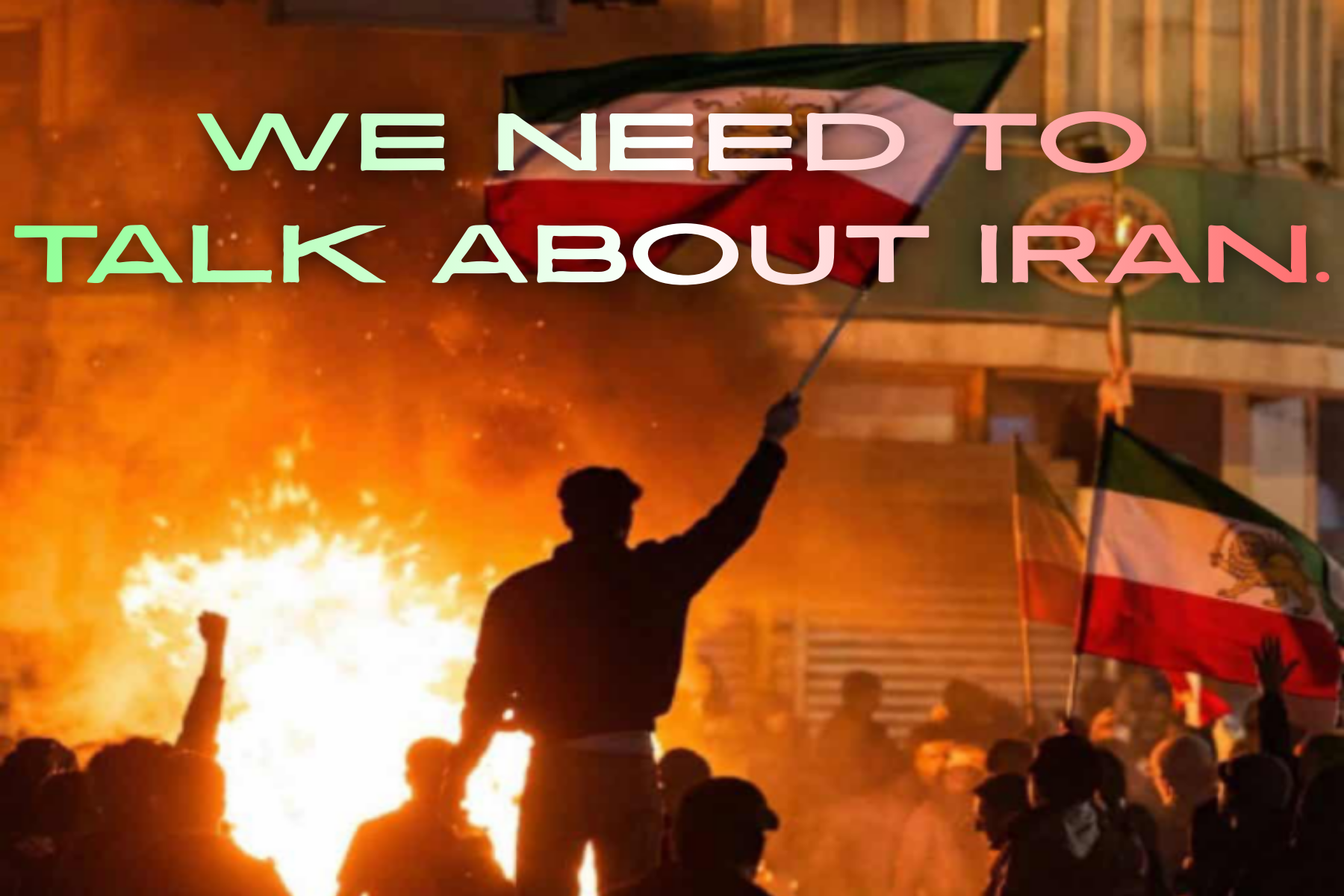
We Need to Talk About Iran

By Sorena Atin and Lily Hodgson

On January 8th and 9th, the Iranian government killed more than 36,500 people in two days. These people were out on the streets, originally protesting extreme inflation to the prices of essential goods across the country, but now calling for a change in the political regime. The protestors came from all walks of life – men, women, children, seniors, businessmen, lawyers, doctors, activists – and from all 31 provinces of Iran. The massacre was accompanied by a complete internet blackout which lasted nearly a month.

Sorena Atin, Brandon University’s only Persian student, is working hard to get people talking about the situation in Iran: “The world not talking about this is really sad and disappointing.” Between human rights organizations like the UN, and international laws like the Responsibility to Protect (R2P), Atin is frustrated that the world isn’t doing more. Even social media has been relatively quiet, on an issue that desperately needs international attention. As part of his mission to raise awareness, Atin has channeled his anger and despair into action. He’s been putting up posters all over campus, speaking in BU panels, talking to students and professors – and reaching out to The Quill to share his story.

36,500 dead is a low estimate. Countless bodies have gone unidentified, many being burned or maimed to the point of unrecognizability. The governmental security forces used military-grade bullets, makeshift weapons, chemical substances like modified tear gas, police vehicles – “anything that could silence the people,” Atin says.

Importantly, Atin urges that this is not an issue of politics or blame, but an issue of human rights. “No Iranian right now is wanting anything to do with politics, because it's their families, it's their nation, and it's the human lives that matters to them most. No oil-related thing, no politics-related thing. It's just their human lives. And if people claim that they care about human rights they should do research on topics like the situation in Iran… Iran is my focus, but at the same time, if human rights matter, it should matter for every single country around the world. It doesn't matter if one person died or 40,000 people died. It's human life. It matters.”

Following the two days of mass murder, the country’s medical system tried to recover. “People [were] overflowing all the hospitals and medical buildings. Which led to a shortage of supplies and medication,” Atin explains. “And at the same time the security forces started raiding hospitals to take all the injured people – take them away to put them in prison or kill them. A lot of doctors got arrested for trying to save people. A lot of nurses either got killed or injured in this process.” The Iranian government’s intentional targeting of injured persons in hospitals and medical centres is a clear violation of the most basic human rights.

The government’s treatment of the dead is also deeply disturbing. In a process that Atin refers to as “kidnapping” and “selling” dead bodies, the Iranian governmental forces began coming up with new ways to abuse grieving family members. They made families pay for each bullet in their deceased loved ones’ bodies, or offer sweets or thank-you letters to the police officers. In many cases, they forced people to sign legal documents stating that the dead individual was working for the government and was killed by protestors. This served the double purpose of lowering the reported number of protestor deaths, and providing an excuse for executing yet more protestors. And this is only when they agree to give the bodies back. It has been reported that the Iranian government is hiding bodies, to use as tools for propaganda – they’re using these corpses as “puppet[s]” to spread their false narrative.

Women and girls are especially at risk of abuse. The dead bodies of women and girls are frequently raped, and then the abusers force doctors to surgically remove the uterus and therefore the evidence.

While all this was going on, the internet shutdown prevented those outside the country from hearing a word about the safety of their loved ones. The complete blackout lasted for around twenty days, and was used to cover up the crimes against humanity that were being committed in Iran. Atin shares his own personal experience with the blackout: “I lost contact with all my family and friends… and it was terrifying. The Internet was already filtered or blocked essentially, on a regular basis. But now they cut off all communications, which means no Internet, no phone call forward line, nothing. We didn't have any news from our family or friends. Didn't know if they were OK, if they got arrested. Since there is no official news coverage in Iran, we didn't hear any news till a couple days after when it got a bit more calm … but not in a good way calm. There were too many dead bodies for the people to come out.”

Even now, internet access is not fully restored to the people of Iran. Only the country’s elites have full “whitelisted” access, which they use to spread propaganda online. For everyone else, calls and messages are heavily monitored. One wrong word, and the security forces can cut the line, show up at your home, and arrest you. Iranian citizens are forced to act like all is well to protect themselves. “Now they're starting to turn back on the Internet, so you get access and communication with friends and family, but just enough to keep both you and them anxious and not fully be honest with each other… because you can't be honest. You can't, because you don't know who's listening or who's monitoring you. So you always have to be extra, extra, extra cautious. People have to download VPNs to lose track of their Internet. Or they have to open secret chats that [when] you leave the chat, it just completely wipes the history.” Atin reveals his own experience communicating with loved ones for the first time after the blackout: “After we started finally calling, I finally heard my grandma's voice after seventeen days of completely no news or anything… Her voice was shaky, which was horrible to hear. And what made it worse was the fact that she was saying, ‘Oh yeah, everything's fine. We're all okay, nothing's wrong.’ That hurts. That hurts a lot to hear a family member talking like that, when you know it's not fine.”

The issues in Iran are far from over. People of all ages and all backgrounds are constantly being arrested, interrogated, and executed, often without cause – simply being in the wrong place at the wrong time is enough reason. Atin’s fifteen-year-old cousin was among those arrested, just for being out at a friend’s birthday party. Miraculously, she was released. He knows of many others who he grew up with, who were not so lucky.

These recent January protests were not the first example of the Iranian government striking down on activism, but it was certainly the deadliest. Over the past fifty years, since the 1979 Islamic Revolution, citizens have been demanding a change of government, demanding a better life. Atin remembers getting a censored education, only having access to manipulated and falsified history textbooks. He was present in Iran during the 2019 and 2022 protests, and the crimes he saw during those periods included the use of chemical gas in schools: “Because most of these protests were youth led, and … all these teenagers wanted a better life and more freedom, they wanted to silence them.”

The Iranian government’s crimes against humanity have gone unmentioned for far too long. Finally now, on an international scale, Atin is feeling some hope. “It made me really happy to hear the European Union, finally, after so many protests and letters to all these officials from Iranians to take action, their action was to put the IRGC [the Islamic Republic Guards Corp.] on the terrorist list. That is a huge shift which can impact the [government] a lot … [restricting] funding for its material use for ballistic missiles and everything.” There have also been several UN conferences discussing Iran, although no decisive action has been taken yet.

Additionally, there have been massive protests all over the world. “All the protests that [have] been organized with different people, groups of people coming out shouting Iran's name… You can see how respectful these protests are. There are videos of people [at] the protest who have garbage bags, and they're protesting as well as grabbing garbage from the ground. Or handing out flowers to whoever's not Iranian and supporting. Or all the police officers who are keeping everything in patrol, going and thanking them. And that's what we want the world to see, because the Iranian government, the Iranian regime, does not define us Persians, us as the Iranian community. We want the world to see us as also normal human beings, someone with culture, someone with prosperity. Someone who just wants a normal life like any other country in the world… democracy, freedom… basic rights.”

So what can we do, as individual students here at Brandon University? It’s hard, when faced with such a huge issue, not to give up hope. But there is hope for the future of the Iranian people. The keys to this hope are education, awareness, and advocacy. We all need to do research, learn about the history of Iran, speak up on social media, organize and participate in protests, write to our political officials. The Iranian government’s goal is to silence protestors – we can not allow them to silence us too.

When asked if he had any closing remarks for The Quill’s readers, Atin emphasized his gratitude: “I just wanted to thank Brandon as a community and Brandon University because of all the support that I've been getting throughout these couple of weeks. Personally, I've been going through a rough time trying to cope with this, because it's essentially like a war happening. I just wanted to thank all the staff members, all the people in this school, and anyone up to now that has been talking about Iran. It means the world to me, and they have my eternal gratitude for all of us.”

Black History Month vs. Valentines?

By Janine Campbell

February is often associated with love and chocolates but it is also a time meant to honour the history, culture, and achievements of Black communities. However, despite its significance, many argue that Valentine’s Day overshadows this annual celebration of heritage.

Black History Month was officially recognized in Canada in 1995, after a motion introduced by Dr. Jean Augustine, the first Black Canadian woman elected to Parliament. Its purpose is to highlight the struggles and accomplishments of Black Canadians, and to educate the public about the lasting impact of systemic racism and the contributions of Black individuals to society.

However, in schools, workplaces, and media coverage, Valentine’s Day often receives more attention. Retail stores are decked out in red, social media posts flood feeds with love-themed content, and community events frequently focus on romance rather than history. While Valentine’s Day lasts just one day and Black History Month spans the entire month, it sometimes struggles to capture the same public awareness or enthusiasm.

Many people see this as a missed opportunity to learn about and celebrate Black history in Canada. Black achievements, stories of resilience, and cultural contributions deserve the spotlight without being overshadowed by candy hearts and roses.

Across the country, some schools and communities are working to change that. Schools are introducing Black History Month initiatives and some social media campaigns encourage people to share stories and celebrate Black excellence year-round. These efforts remind us that honouring Black history is not just a February activity, it’s a conversation and celebration that should continue all year long.

As Canada continues to strive for inclusion and equity, it’s important that celebrations of love do not drown out celebrations of heritage. Black History Month may not come with chocolates or roses but its lessons, stories and legacies are far sweeter and far more necessary for building a more informed and equitable society.

Redefining Valentine’s Day

By Janine Campbell


Valentine’s Day has a way of showing up whether you’re ready for it or not. One minute it’s just another cold February week, and the next there are red balloons in the grocery store, heart-shaped chocolates at the checkout, and a quiet pressure hanging in the air that asks: So… what’s your plan?

Photo by Clover Tahhan

For some people, Valentine’s Day is exciting. It’s a chance to celebrate a relationship, dress up a little nicer than usual, exchange thoughtful gifts, or just feel chosen for a day. For others, it’s awkward at best and uncomfortable at worst. It can feel like a spotlight on what you don’t have, what didn’t work out, or what you’re still figuring out. Most of us fall somewhere in between… not fully in love with the holiday, but not totally against it either.

What makes Valentine’s Day especially strange in a school setting is how public it can feel. You hear people asking each other, “Did you get anything?” You see friends carrying flowers through the hallways. You notice who’s posting what online. Even if you don’t care that much, it’s hard not to notice. And when you do, it can make you start comparing your relationship status, your friendships and your life to everyone else’s Instagram story.

But here’s the thing: Valentine’s Day is way bigger than just romance, even if it doesn’t always seem like it.

At its core, Valentine’s Day is supposed to be about connection. Not just romantic connection, but human connection….the kind that makes you feel seen, supported, and valued. That can show up in a lot of ways that don’t involve roses or grand gestures. It can look like a friend saving you a seat in class. It can be late-night talks, inside jokes, shared playlists, or someone checking in on you when you’ve gone quiet.

In school, some of the most meaningful relationships we have aren’t romantic at all. They’re the friendships that get us through long semesters, stressful exams, and days when everything feels like too much. They’re the people who know your coffee order, your worst habits, and your best qualities and still stick around anyway. Valentine’s Day can be a reminder to appreciate those connections, even if they don’t fit the traditional idea of the holiday.

There’s also a side of Valentine’s Day we don’t talk about enough: being okay with being on your own. There’s a lot of pressure to see being single as something that needs fixing, especially around this time of year. But being single doesn’t mean being lonely, and it definitely doesn’t mean being unlovable. Sometimes it means you’re learning who you are, focusing on your goals, or just not settling for something that doesn’t feel right.

In a school environment where everyone seems to be growing, changing, and figuring themselves out at different speeds, that’s completely normal. Some people are ready for relationships early on. Others aren’t. Neither is better. They’re just different paths and both are valid.

It is also worth acknowledging that Valentine’s Day can be tough for people who are grieving, healing from breakups, or dealing with complicated emotions around love and self-worth. When everything around you is themed around happiness and romance, it can feel isolating if you’re not in that headspace. If that’s you, you’re not alone, even if it feels like you are.

That is why kindness matters so much right now. Not the performative kind that only shows up for Instagram posts, but the quiet, everyday kind. The kind that says, “I see you,” without needing a holiday as an excuse. A simple message, a handwritten note, or just spending time with someone can mean more than the most expensive gift.

Maybe this Valentine’s Day doesn’t need to be about doing what everyone else is doing. Maybe it’s about redefining what the day means to you. That could mean celebrating with friends, treating yourself to something small, writing a note to someone who’s helped you this year, or even choosing to ignore the holiday altogether (and that’s okay too).

Love isn’t something that only exists on February 14th. You see it when a friend checks in before an exam just to say “you’ve got this”, when someone shares their notes after you miss class, and in the small moments that don’t make headlines but still matter. If Valentine’s Day reminds us of anything, it should be that connection comes in many forms and none of them are less important than the others.

So, whether you’re excited, indifferent, or simply ready for the day to pass, just remember this: you don’t need a card, a date, or a perfect plan to be worthy of love. You already are. And sometimes, the most meaningful Valentine’s gesture is simply being a little gentler with others and with yourself.

Abducting Maduro: A Brief History

By Jayvis (Ivy) Eisener, Junior Reporter


Understanding the abduction of President Maduro needs the context of history, political science, and much more of the human experience than my writing can capture. On the 28th of January at 5:15, there will be a panel in the John E. Robbins library which will address these issues and others with a greater range of expertise. I feel obligated to respond and to make sense of these events as a person in the world, to give both myself and potentially other students the tools to think more widely.

An analysis of the abduction of Maduro should not go without the comments of the Commander-in-Chief of the nation which abducted him. Trump was keen to mention his nation’s policy towards Latin America, called the “Donroe Doctrine.” Literate individuals believe that the most powerful man in the world was likely referring to the Monroe Doctrine. Meg Kinnard of PBS News summarizes that the doctrine was “originally aimed at opposing European meddling in the Western Hemisphere.” It has since been invoked repeatedly by subsequent presidents angling to justify U.S. intervention in the region. Following this, the Trump administration claimed that the Trump admin would run, or even was running, Venezuela. The Trump Administration used the Monroe Doctrine to justify its intervention and subsequent ‘takeover’ of Venezuela.

Beginning in September of 2025, Latin American relations have been headlined by the illegal bombings of fishing boats within Latin American waters. The truth of the situation is this: there have been several attacks by the USA on citizens in small boats of many Latin American countries, including Venezuelan citizens. These attacks, outside of the waters controlled by the United States, have killed 115 people. There is zero evidence that these individuals were threats to the United States, and these attacks are both in obvious violation of international law, as well as US law. Killing individuals suspected of crimes without a trial is flatly illegal. The United States alleges that these individuals are “narco-terrorists” who are transporting drugs into the country. They are alleged members of drug cartels which the US is at war with, and, as a result, they are able to make strikes on these citizens. However, there has been absolutely no evidence presented of the existence of these drugs or that these boats are even going to the United States. A particularly egregious example is the September 2nd  attack in which a “double-tap” was conducted. According to the video of the attack, a strike was made which disabled the vehicle of the alleged criminals. This was followed by a subsequent ‘tap’ which was to murder the individuals. I see these attacks, and now the abduction of the president of a foreign nation, however antidemocratic he may be, as an escalation of the same practice. But what could the justification be? Is the United States simply an operative of democracy around the globe, ensuring that authoritarian leaders are kept in check with power? Let's look back further, before September.

We should consider the history of the United States and its involvement in Latin America as one of frequent interventions, militarily, but also economically and politically. Venezuela being a nation of mineral resources, and especially oil, the United States has historically taken an interest in its access to these resources. Their involvement in Latin America has been more than simply the deposition of authoritarian rulers in favour of the creation of democratic ones. Rather, their relations with these nations have been one of the ensuring of United States economic and geopolitical interests in the region. When the United States illegally armed, trained, and funded the Contras as a group of right-wing force which sought to overthrow the government of Nicaragua, the reason for US meddling in the region was because the Nicaraguan government was nationalizing infrastructure that was owned by United States companies. The threat to their economic interests was far more important than manufacturing a democratic regime. There are other examples, such as the support of military dictator Pinochet in Chile, who overthrew the Allende government. It shows a pattern of behaviour which does not align with the idea that the United States has historically had Democracy as a prioritized outcome in relation to their interventions.

This paper was partly sparked by the pervious article written by Tenma Bonafacio. They identify liberals who are Americans, who “view Trump as an enemy and a threat to their liberties and rights.” This is contrasted by Venezuelan citizens which celebrate the disappearance of the authoritarian leader Maduro. The author suggests that resentment towards Trump is the reason for ’liberal‘ pushback on the abduction of a foreign leader. They also consider the idea that Trump would be criticized as well for abducting Putin, simply because it was Trump taking these actions. This sentiment that Donald Trump is being criticized unfairly or irrationally is a popular idea, identified more broadly as “Trump Derangement Syndrome.“ However, this kind of analysis detracts from the realities of the situation in regard to the history and politics of the region. It forgets and ignores the legality of the situation. More importantly, it does not make a single mention of a real person who makes the idealistic consideration that Trump and everything he does is bad. On the contrary, we can find profound evidence from many sources, as I have, some surely ’liberal’ or even in some eyes, ’leftist,’ which are interested in the kinds of facts I have mentioned here.

Now, I do in fact feel obligated to leave this article with analysis from a Leftist perspective. This is a continuation of the imperial and neocolonial project of the United States which has existed since the founding of the nation itself. This program has sought in one way or another the control, subjugation and domination of the peoples of Latin America for their money, resources, and labor. It has little at best to do with ‘fighting authoritarianism,’ ‘upholding international law,’ or the maintenance of human rights, which it proclaims so often.

Sources:

1 - Nandika Chatterjee, “The 200-Year-Old Foreign Policy Vision Underlying Trump’s ‘Donroe Doctrine’.” Time, Jan 7 2026; Meg Kinnard, “How the Monroe Doctrine factors into the U.S. arrest of Venezuela’s Maduro.” PBS News, Jan 6 2026.

2 - Meg Kinnard, “How the Monroe Doctrine factors into the U.S. arrest of Venezuela’s Maduro.” PBS News, Jan 6 2026.

3 - The Associated Press, “U.S. military says 8 killed in strikes on 5 more alleged drug boats — but survivors jumped overboard.” CBC News, Dec 31 2025.

4 - “Under international law, an armed conflict between a state and a non-state actor exists only if there is “protracted armed violence” against the state. But experts like Pappier from Human Rights Watch point out that criminal activity does not amount to hostilities under international law.”

Christina Noriega, “‘Inevitably difficult’: Inside one Colombian family’s fight for justice after the US boat strikes.” Aljazeera, Jan 2026.

5 - Jeffrey Stein & Christopher Anders, “Trump’s Boat Strikes Are Illegal. The Public Needs Answers.” ACLU, Dec 18 2025.

6 - The Associated Press ,“U.S. plane used in boat strike was disguised as civilian aircraft, contrary to Pentagon regulation.” CBC News, Jan 13 2026.

7 - Jeffrey Stein & Christopher Anders, “Trump’s Boat Strikes Are Illegal. The Public Needs Answers.” ACLU, Dec 18 2025.

8 - For further reading on how I came to this analysis, see: Scott Neuman, “U.S. interventions in Latin America and the Caribbean haven’t always gone as planned.” NPR, Jan 2 2026; Orlando Hill, “A history of US intervention in Latin America.” Counterfire, Jan 21 2026; “A timeline of CIA operations in Latin America.” Aljazeera, Nov 26 2025; and Alan L. Mcpherson, A Short History of U.S. Interventions in Latin America and the Caribbean. Wiley/Blackwell, 2016.

9 - Tenma Bonafacio, “OPINION: Venezuela – Foreign Sentiments Contrasted by Local Celebrations. Hypocrisy En Masse?” The Quill, Jan 14 2026.

10 - Alex Pattakos, ”The Paradox of ‘Trump Derangement Syndrome’.” Psychology Today, Sep 5 2024.

OPINION: Venezuela - Foreign Sentiments contrasted by Local Celebrations. Hypocrisy En Masse?

By Tenma Bonifacio

The very short bombing of Venezuela and the immediate capture of its leader, Nicolás Maduro, has become an international hot topic as of current. The consensus regarding the capture has been divisive, and it calls to attention the reliability of international law in preventing powerful states from taking actions unilaterally. Thus, it brings up the question of whether or not the frameworks that represent the image of global peace, order, and cooperation only apply to less powerful and affluent states, as opposed to bigger states being outside the control.

On another note, most liberal sentiments online have criticized the US military action, denouncing Trump’s use of force. The hatred and condemnation regarding the actions taken by the US administration have sparked a public gathering in New York to criticize the bombing and arrest of a foreign President. But these are the opinions of Americans themselves, as well as foreign liberals who view Trump as an enemy and a threat to their liberties and rights. On the other side of the border, a larger majority of Venezuelans are celebrating the downfall of their President. Maduro was viewed as a Dictator, and even liberal Venezuelans who are opposed to Trump are happy that Maduro is finally gone. This brings into light the fickleness of public sentiments. Hypothetically, if Trump were to have world leaders like Putin captured, bypassing international laws, would his actions be criticized? Would the US be praised because they took down a character that a large amount of the population views with infamy? Or would such military actions be criticized as US overreach and acting like a police force, because it was Trump who did it?

Maduro assumed office in 2013 for the first time after Hugo Chavez. After that, Maduro held influence in many political institutions within the country, including the military and the Supreme Tribunal, which deprived the country of power held by the National Assembly, as well as depriving the members of the Assembly of their immunity. He’d be reelected in 2018 and in 2024. According to the Human Rights Watch non-profit organization, poor communities no longer supporting Maduro experienced arbitrary arrests and extrajudicial killings. Yet a large part of this news is not known by foreign supporters of Maduro. Some news even bend the stick, stating that Venezuela lost a dictator just to gain a new one - a speculation that tries to downplay the fact that a dictator was nevertheless still brought down. The worries of America becoming the next dictating power over Venezuela is understandable, given how proactive Trump and his administration have been in going against the current world order, as well as America being known for always going to war where the oil is abundant. Venezuela possesses oil reserves which many believe to be the main reason Trump and the US government are in conflict with Maduro and his government.

Contrasting Maduro and two other presidents, Nayib Bukele and Duterte, the wide arrest of gangs by the former and the mass killings of drug addicts by the latter have significantly brought down crime rates in their country, prioritizing a strong reformation of a country that has been steeped in corruption, and determined to be leaders that improve their country. Yet, due to their closeness with Trump, both have been criticized as dictators by leftist media and liberal individuals online. Another case of foreign individuals outside looking in and being fed by the opposition media of the country to lock them in an echo chamber. They continue to hate these characters, when their own people praise them. No one complained or even largely knows about how Duterte was arrested. The current government, which is controversially steeped in allegations of corruption and drug trafficking, superseded the local judicial process and ambushed Duterte after he went to Hong Kong to check his health, and surrendered him to the ICC where his health has deteriorated.

Large-scale protests broke out over the surrender of their President, yet the media had been silent about the entire events, only listening to news provided by the opposition - the same government that had Duterte arrested without going through proper channels locally. The same local supporters of this government, who are primarily listened to by foreigners, say that the Human Development Index of the Mindanao region of the Philippines is dubbed to be on the same level as Sub-Saharan Africans. Where is the backlash over such open derogatory insult and stereotype?

What qualifies a world leader to receive the support of foreign liberals? Should they be competent leaders that strive to better their country no matter what, or is it to simply hate Donald Trump?

The Quill 2025-26 Job Postings

Editor-in-Chief

Start Date: September 1st, 2026 (with unpaid training February – August 2026, according to your schedule)

Applications due January 31st, 2026, 11:59pm

Wage: $500 / month, September – May

Responsibilities:

- Lead weekly meetings

- Manage a team of 50+ students

- Create and lay out at least twelve issues of The Quill per school year on Adobe InDesign or a similar program

- Copy edit articles to a high standard of professionalism

- Edit all photos on Photoshop or a similar program to ensure maximum visual impact

- Communicate and coordinate regularly with General Manager and Board of Directors

- Contribute articles and photos regularly

- Assist with distribution

- Other duties as necessary.

Requirements:

- Current BU student in good academic standing

Assets:

- Upper year student (3rd +)

- History of active contribution to The Quill

- Experience with Adobe InDesign, Photoshop, or similar programs

- Experience with project management and leadership

- Experience with copy editing or proofreading, above-average grasp of proper grammar and language

- Organized, creative, and passionate mindset

- Enthusiasm for journalism

Please send resume and cover letter to eic.thequill@gmail.com to apply.

Assistant Editor-in-Chief

Start Date: September 1st, 2026 (with some unpaid training February – August 2026, according to your schedule)

Applications due January 31st, 2026, 11:59pm

Wage: $350 / month, September – May

Responsibilities:

- Contribute regularly to The Quill

- Attend all weekly meetings, and lead meetings when EIC is unavailable

- Assist EIC with copy editing, proofreading, or layouts as needed

- Plan and coordinate any events, merch designs, posters, etc.

- Assist with distribution

- Ongoing training for Adobe InDesign and EIC duties, ideally with the intention of taking over the role when EIC graduates

- Other duties as assigned by EIC.

Requirements:

- Current BU student in good academic standing

Assets:

- History of active contribution to The Quill

- Experience with Adobe InDesign, Photoshop, or similar programs

- Experience with project management and leadership

- Experience with copy editing or proofreading

- Organized, creative, and passionate mindset

- Enthusiasm for journalism

Please send resume and cover letter to eic.thequill@gmail.com to apply.

Social Media and Outreach Coordinator

Start Date: September 1st, 2026 (with some unpaid training February – August 2026, according to your schedule)

Applications due January 31st, 2026, 11:59pm

Wage: $250 / month, September – May

Responsibilities:

- Create at least one social media post per week

- Manage Instagram and TikTok accounts

- Work together with EIC and AEIC to craft relevant content and grow a more active presence on campus

- Reach out to local businesses about stocking our issues, and distribute to these businesses as required

- Other duties as assigned by EIC.

Requirements:

- Current BU student in good academic standing

Assets:

- History of active contribution to The Quill

- Experience with Canva, Photoshop, or similar programs

- Eye for visual design and aesthetics

- Experience with social media management

- Organized, creative, and passionate mindset

- Enthusiasm for journalism

Please send resume and any visual portfolio items to eic.thequill@gmail.com to apply.

November/December Student Struggles

By Danil Buzhor, Senior Reporter

At this point in the semester most students’ schedule effectively collapses. This is not an emotional crisis, but rather a logistical one. The structure of the academic calendar is designed to guarantee a bottleneck of work right about now, and solutions like Reading Week don't resolve the problem.

In concept, Reading Week sounds great: a break in the semester to catch up on reading and rest. In reality, it functions differently. Because classes are paused, many professors view this as "free time" for students. They then assign midterms or major papers due immediately after the break.

Instead of spending time resting, students prepare for the pile of assignments and other deadlines that await them once they get back. It is not a week of recharge but a deferral of stress. We are not recovering; we are just banking hours for the projects due two weeks later.

The main problem isn't the difficulty of the work - it’s the clustering. There seems to be zero coordination between departments regarding major deadlines. At first it seems to be just good or bad luck, and yet it is consistently true that a Computer Science project, a Math midterm, and a Humanities essay will all fall on the same Thursday in late November.

When multiple major tasks are due within a window of 72 hours, the goal shifts from "doing good work" to "submitting something that exists." Quality suffers. Students aren't trying to demonstrate what they learned. The end of the semester turns into an exercise in time management rather than academic achievement.

By this point in the term, everyone is operating on diminishing returns. Focus is lower, patience is thinner, and the material is getting harder. The current schedule ignores this reality. It backloads the heaviest weight of the semester onto the time of year when productivity naturally dips.

The solution is not necessarily less work, just better spacing. If what the university wants to do is test what we really know, spreading the load out - or imposing policies against deadline clustering - would produce better grades and better retention.

Brandon’s School Board Election: What Is It and Why Should I Vote?

By Jayvis (Ivy) Eisener, Junior Reporter

In May of 2023, our university made signs, buttons, and a slogan in response to the Brandon School Board’s proposal to review and potentially ban books relating to gender, sexuality, and the expression of 2SLGBTQIA+ identity. That slogan? “DON’T.” Now, in 2025, Ward One is having a school board by-election. Where do the candidates stand on not only this issue, but issues of importance in regard to educating youth in Brandon?

I reviewed each candidate’s profile, their interviews with the Brandon Sun, and available social media. Additionally, Brandon Pride reached out to each member, asking their positions on how they would ensure 2SLGBTQIA+ students have a safe and welcoming learning environment. I also received email responses to questions from three candidates. Here is what I found.


Who Can Vote?

To be able to vote in the school board by-election, you must be a Canadian citizen of 18 years of age (born on or before Oct 16, 2007), a resident of the school division (not just Ward One), and you cannot be disqualified from voting (you would know if you’re disqualified).

You need to bring one piece of government-issued photo ID OR two other documents showing proof of identity and residence.

How Can I Vote?

The by-election will take place tomorrow, Thursday, October 16th, 2025.

Voting is open from 8am to 8pm at the following locations:

• Monterey Estates Recreation Hall, 40 Mockingbird Drive

• McDiarmid Drive Alliance Church, 635 McDiarmid Drive

• East End Community Centre, 405 Park Street

• Victoria Inn, Salon 2, 3550 Victoria Avenue

• Brandon School Division Admin Office, 1031 – 6th Street

• Brandon Shoppers Mall, Unit #22, 1570 – 18th Street

Who are the Candidates?

Laura ARMITAGE: Armitage is a parent of four children who are enrolled in a Brandon school. She is a longtime member of École New Era’s parent council and positions her experience as unique. Her primary concerns are the unsustainable reliance on volunteers in their lunch programming, and the ratio of students to teachers being too large. Laura supports the creation of safety advisory committees. She is also working to bring “Canadian Parents for French” back to Brandon, which is a nonprofit that supports learning and using the French language. Some may recall that French is in fact a national language of Canada, something protected in part because of the work of Metis individuals in Manitoba. Armitage responded to Brandon Pride saying that she considers herself a “strong ally of the 2SLGBTQIA+ community” and would, as trustee, “approach any new policies or revisions of existing ones with an inclusive lens”.

Michael GRANTHAM: Grantham is “not a fan of banning books” and thinks that there needs to be age-appropriate material in schools. He supports the diverse material that is safely available in places like the library, which he describes as more reliable and accurate than the information available online. His intention is to “be a voice for the masses, which includes the lgbtq+ community, teachers, support staff, parent council, and ultimately, the public at large”. Michael is also deeply concerned for the safety and security of students, and has expressed he is interested in seeing a multitude of items explored. In his email to me he expressed concerns around many other items, including the staff/student ratio, bullying/racism/intolerance in schools, as well as issues with lunch programming.

Bonnie-Lynn MILLS: Mills has a history in early childhood education, as well as in volunteer work, and this will be her fourth attempt at being elected for the Board. In 2022, she articulated an interest in avoiding centralizing education on a National level, recognizing that the Brandon School Division has different needs than other divisions. Reading her other interviews, Mills is clearly deeply aware of issues in the

School Division. In 2023, she commented not only on teacher/student ratios but also on the attempt to ban books in May. While she could not attend the meeting in person, a part of her statement on the issue was: “Everybody needs to be their own person. I definitely also don’t believe that anything should be pushed on anybody if they don’t feel the same.” Bonnie also responded to Brandon Pride’s email around 2SLGBTQIA+ issues, and while she did not explicitly mention book bans, she spelled out how libraries and classrooms reflecting diverse voices and experiences is tied to the values of non-discrimination, safety, inclusion, and a respectful environment.

Shawna MOZDZEN: As an Educational Assistant since 2007, Mozdzen has first-hand experience about her key issue: ensuring families and students feel supported, especially concerning learning challenges and mental health struggles. Safety and funding are other central issues. Uniquely, she is a Métis and First Nations woman who would bring a unique voice for reconciliation to the Brandon School Board. She is quoted in the Brandon Sun saying, “I’m a firm believer that we need to learn about Indigenous culture and the beauty of it, alongside the difficult history, to move toward reconciliation”. The access to information that Shawna provides seems unique in both its breadth and depth. Not only did she do an interview with the Brandon Sun, she replied to my email, and also frequently answers questions on her Facebook page, “Shawna Mozdzen for BSD Trustee”. This is a necessary consideration in the context of transparency and accountability, where activity on social media and a willingness to answer questions is paramount. One unique question she answered was from an 11-year-old child (with help from mom) on her perspective on school overcrowding. In this respect Shawna seems unique in the amount and quality of her responses and the public’s access to them. On the topic of banning books, Shawna is very clear that not only is she not in favour - she states clearly that books are deeply valuable for students, that they facilitate conversations with parents, and that librarians are capable of acting in their profession in determining what is age-appropriate.

Eren OLESON: Oleson wants to hire more teachers and EA’s. He is also a part-time Brandon University student! In his interview with the Brandon Sun, he says that there is waste in the School Division’s budget, which could be reallocated. Oleson also stated that he was uninterested in revisiting the book banning issue, and added that the school board is not a place for politics. A unique proposal from Oleson is to see students in leadership roles. Replying to Brandon Pride, he stated that he would advocate for equity regarding all marginalized groups, as well as that we should ensure inclusion policies are met and areas that fall short must be addressed.

Himanshu SHAH: Safety and support for students, teachers, and families is the headline for Shah. He states in his Brandon Sun interview that he supports the creation of safety advisory committees, but wants more done such as speed controls around school zones and year-round reduced speed limits. Reducing class sizes and workloads for teachers, as well as increasing the number and hours of EA’s are topics mentioned. He was one of two individuals who did not respond to Brandon Pride. His position on the banning of books is unclear.

Henry SIEKLICKI: Sieklicki has previously run for Ward 2, losing 299-128 to Lorraine McConnell. He is interested in bringing metal detectors to every school in Brandon, as well as staff to monitor these devices. Business owners in the community have commented on social media that this would be a multi-million-dollar affair, which would actually do little to alleviate the underlying reasons why students or community members might enact violence at schools. He sees “no alternative” in ways that would alleviate concerns around safety. Henry also hopes to increase English and Math outcomes for students. Henry was one of two individuals that did not respond to Brandon Pride - however, historically, he was quite clear in his support for the banning of books within the school division. Sieklicki is definitely the candidate with the most signs around Brandon, touting slogans like “Education, not indoctrination” and similar anti-2SLGBTQ+ rhetoric.

Prosecution Seeks Adult Sentence for Brandon Highschool Student

By Tenma Bonifacio

A few months ago, in June, a high school student in Neelin was attacked and injured by

another student with a sword. The event had made a great wave in Brandon’s school division

committees, and safety, along with anti-racism, is to become a focus for improvement for the

division. Now, it seems that the goal of the Crown prosecutors is to see the offending party receive an adult sentence should the trial end in his conviction or in pleading guilty.

Brandon police have indicated that this was a racially motivated attack earlier this year. The initial charges the teen had incurred, which included one attempted murder, have now been upgraded to three attempted murders.

The trial has yet to be given a date, but the case will return to court next Monday, October 7th, for case management concerning the prosecution’s request for an adult sentence.

Charles Adamu Celebrates Launch of “How You Feel"

By Janine Campbell, Senior Reporter

Photo by Maxwell Avwata

On Thursday, September 25, Bailey’s Café came alive with creativity, warmth, and community spirit as Charles Adamu officially launched his very first book of poetry. Though the book was digitally released on August 26, this in-person event gave friends, supporters, and literature lovers the chance to gather and celebrate a remarkable milestone in his journey as a writer.


The evening unfolded with Charles thoughtfully walking the audience through each chapter of his book, sharing the inspiration behind his words and the emotions woven into his writing. His engaging storytelling made the audience feel as though they were part of the creative process itself.


Adding a personal touch to the night, Charles had chosen two individuals for each chapter to recite their favourite poems from the collection and explain why those pieces spoke to them. Their reflections were heartfelt and sparked meaningful conversations about the themes and emotions captured in the book.


The turnout at Bailey’s Café was exceptional. The cozy atmosphere, paired with the vibrant energy of those in attendance, created a perfect setting for connection and celebration. Attendees expressed admiration not only for the quality of Charles’ work but also for his courage in sharing his voice with the world for the very first time.


By the end of the night, the sense of pride and encouragement was unmistakable. The book launch was more than just an event, it was a celebration of perseverance, creativity, and community. For Charles Adamu, this marks only the beginning of what promises to be a bright literary journey.


And honestly? The whole evening just felt good. People laughed, clapped, snapped pictures, and showed up for Charles in the best way. You could tell how proud everyone was to see him step into this new chapter (no pun intended) and the excitement in the room made it clear this is only the start of something amazing.

Welcome to BU!

The 2025-26 academic year has officially begun! Orientation was on September 2nd, and classes for most departments began on September 3rd. Since then, the campus has been buzzing with energy. There have been Orientation Week (more like Orientation Month) events nearly every day. There seems to be a lot of excitement in the air this year - or maybe it’s just the early fall weather!

As we all try to get back into the rhythm of classes and schoolwork, remember to take care of yourself. It can feel really difficult to maintain a balance between homework, a social life, and self-care - don’t forget to drink water, eat healthy meals, move your body, and make time for activities and people you care about. You got this! If you’re struggling to find a balance, BU has all kinds of wonderful supports in place to help you manage - see the Student Services webpage for more info.

And on behalf of The Quill, thank you, seriously, for picking up a copy of our newspaper. We put a lot of care and effort into making it, and we really hope you find something in its pages that interests you. Stay tuned for new issues every two weeks, and if you’d like to get involved (and get paid!) contact eic.thequill@gmail.com.

Whether you’re in your first year or your fifth, we wish you a very warm welcome back to campus!

Looking Back on an Eventful Year

By Ethan Cidro, Senior Reporter

Whether it be tragedies or comedies, 2025 has been an eventful year so far. We’re already nearly done with the year — if you didn’t know — but despite time passing quickly, it doesn’t seem to have caught the year off-guard, producing event after event as life does, whether internationally or domestically in Canada. As a chance for respite, I’d like to take a brief recap of the year - and though not all of them, to recount a few events in different categories that occurred early on in the year.

Despite these events not originating in the same country, for them to happen twice or more in the same year may stun those who have been disconnected from what’s been occurring around the globe. Usually, when we focus on politics, our eyes drift towards our neighbouring countries, the United States, Russia and Ukraine, or Israel and Palestine, across the Atlantic and situated near the eastern Mediterranean Sea. However, in terms of civil unrest, we have seen various recurrences sprouting everywhere.

In Indonesia’s case, its economy has been worsening, yet despite this, a housing allowance for parliament members was still proposed. Such a disconnect with the rest of the public who are experiencing this struggle sparked a protest in August. It seems that an approach Indonesians have taken is to fly the Jolly Roger of the Straw Hat Pirates from the famous manga, anime, and Netflix live-action adaptation, One Piece. A clever method, as the fictional pirates also declared war against an oppressive government within the show.

In Serbia, demonstrators have been protesting against the corruption of the government, which started when the roof of a railway station in Novi Sad collapsed last November, leading to the deaths of 14 people. However, in Belgrade on the 15th of March, a large congregation of protestors was allegedly hit by a sonic weapon or sound cannon illegally during a silent vigil.

Of course, the United States has also been experiencing their own troubles as protestors clashed and continue to clash with ICE all year round.

In the United Kingdom, apart from the heavy restrictions English denizens are facing along with their access to the internet, they are also experiencing a conflict in which flags of their country, the red cross of England and the Union Jack, are being flown up and then taken down. Such a display has been occurring all over the country.

In France, despite having an unofficial culture of protest, a celebratory riot is definitely a noteworthy event to distinguish. With Paris Saint-Germain’s total dominating victory over Inter Milan in the finals of the UEFA Champions League, a celebration turned into a complete riot with hundreds of people partaking in mass vandalism and burning of cars, lasting only one day, from the 31st of May to the 1st of June. Of course, it is important to note that as of September 9, 2025, it seems France is yet again bracing for another protest as the ‘Block Everything’ movement campaign defies French President Macron and turns the new Prime Minister’s first day into a nightmare.

Past the political and civil fiasco of the world this year, wildfires are something that have been very relevant this year. Not only Canada, but also the United States opened the year with a massive wildfire on the 7th of January. Homes were burnt, families were affected, and they needed to apply and receive permits to rebuild the homes they lost. Up north, on the other hand, our own province of Manitoba experienced extreme wildfires, if the heavy smoky summer or bad air quality and smell hadn’t clued you in to the fact yet. This summer resulted in evacuations of many towns and the city of Flin Flon, where some people have only recently been seeing progress in the possibility of returning home. Canada has had three memorable years of wildfires now, of which it seems that recent news outlets have been reiterating from a study that the smoke produced by the Canadian wildfire in 2023 caused 80,000+ premature deaths on an international scale.

On top of these tragedies, it seems that the world has seen some aviation accidents following the consecutive tragedies at the end of the year in 2025. Accidents like the Air Busan Flight 391, which caught fire while preparing for take off; the Potomac River collision, where an Airliner collided with a Black Hawk Helicopter, killing 67, including young figure skaters and those who accompanied them; and the Hudson River Helicopter Crash, where a family of five, along with their pilot, lost their lives in April.

Of course, more events occurred, some happier. Regardless, it seems 2025 hasn’t exactly been the quietest year. Despite it all, we are nearing 2026, and till then, please continue to stay safe. Welcome back to school.

Brandon University Computer Science Club By Daniel Buzhor, Junior Reporter

Let’s be real... Studying computer science is tough. Between theory-heavy lectures, last-minute assignment scrambles, and hours spent debugging the simplest bugs, it’s easy to fall into a rut where coding becomes just another thing to get through. A lot of us want to build cool projects, get better at coding, maybe even land that dream job — but actually finding the motivation outside of class? That’s the hard part. That’s where the Brandon University Computer Science Club comes in. It’s all about creating a space that encourages, supports, and pushes students to code more in their free time—whether that means working solo on a personal project, teaming up with others, or just finally starting that idea that’s been sitting in your notes app. The goal? Learn by doing, build things that matter, and get job-ready in the process.

Say hello to the Brandon University Computer Science Club — a brand-new student-led initiative created to bring BU’s coders, tech-lovers, and curious minds together. Whether you’re into building cool apps, competing in hackathons, collaborating on team projects, or just trying to get out of a coding slump, this club is here to make coding feel fresh and fun again.

As the current president of BU Chess Club and Science Representative for BUSU, I’ve seen firsthand how much energy and excitement student-led clubs bring to campus. So when I heard about the launch of the Computer Science Club, I knew it was something special. Who knows - we might even collaborate on something cool in the future.

Why This Club Exists

Let’s be honest: school doesn’t always give us the time or space to explore the parts of computer science that actually inspired us to start in the first place. It’s easy to lose motivation when every bit of coding is tied to grades, rubrics, and due dates. The Computer Science Club is here to flip that around.

The club is a space for students who want to do more with what they’re learning - whether that’s tinkering with side projects or joining coding challenges. You don’t need to be an expert, just willing to learn.

What the Club Actually Does

The CS Club is planning a variety of events that are equal parts useful and fun. Think:

- Summer Challenges – Stay sharp during the break with various coding challenges where you can level-up your skills.

- Hackathons – Team up, brainstorm, build something awesome in a short amount of time, and win some bragging rights.

- Mini Project Challenges – Get a theme, a deadline, and let your creativity run wild.

- Workshops & Talks – Learn new tools, frameworks, or tech tips from your peers or guest speakers.

- Collaboration Spaces – Got an idea you’ve been sitting on forever? Bring it in, talk about it, maybe even find someone who wants to build it with you.

Basically, it’s everything we wish we had earlier in our degrees. A place where you’re encouraged to take risks and ask questions.

Who Can Join?

The main audience of the club is CS majors and minors, however if you consider yourself a

programmer or somebody who wants to try out coding, you are welcome to join!

The club is open to all BU students, not just Computer Science majors. Whether you’re studying psychology and want to build a mental health app, or you’re a business student curious about data analysis, there’s a place for you here. Coding isn’t limited to one field anymore, and this club reflects that.

And if you’re totally new to programming? Don’t let it stop you! While the club isn’t specifically designed for beginners, that doesn’t mean you won’t fit in. In fact, learning alongside others - seeing how they approach problems, asking questions, and collaborating on real projects is one of the fastest ways to improve. You don’t need to know everything; you just need the drive to learn and the courage to dive in. The club is here to support that.

Why You Should Join (Even If You’re Busy)

We know university life is hectic. Between assignments, part-time jobs, and maybe trying to sleep once in a while, it’s hard to justify adding another thing to your calendar. But the great thing about this club is that it’s flexible. You can participate in events that interest you and take breaks when you need to.

Plus, the benefits go beyond just coding practice. You’ll get to know new people, gain confidence in your skills, maybe even find someone to work with on a side hustle. It’s also the kind of involvement that helps to fill out your resume with projects; employers love seeing real-world project experience and teamwork in action.

Stay Connected

The club is new, but it’s growing fast and the more people who get involved, the better it gets. For updates on meetings, events, and general chaos, join the club’s Discord: discord.gg/XuPVzYNk. You’ll find announcements, project highlights, and all the info you need to stay in the loop.

Whether you’re a seasoned coder or someone who’s never opened a code editor, the Computer Science Club is for you. It’s a place to learn, to fail, to build, to fail, and maybe even to succeed one day.

Former President Rodrigo Roa Duterte’s Trial in the Hague Begins ,By Tenma Bonifacio, Junior Reporter

Former President Rodrigo Roa Duterte’s Trial in the Hague Begins The Philippines split: Some praising the arrest and serving of justice, most protesting the criminal act of abduction.

Ex-president of the Philippines, Rodrigo Duterte, had just returned from Hong Kong when he was ambushed by the police of his own country and put into custody. He was sent to the Netherlands to stand trial for crimes against humanity.

During his time as president, Rodrigo Duterte became a controversial figure to the international community, yet many (not all) Filipinos saw him as a national hero. He was a man who did not play with words or oratory skills to hide his true intention and was very upfront and matter-of-fact with the people. People complaining of his “tyranny” and his merciless crusade in his war on drugs were the same people who voted for him, despite Duterte himself saying openly what his plans were during the elections. People have had enough of lies and years of inaction in the Philippines. Governments were corrupt, and unlike Western countries that have the capacity to provide care for drug addicts, the Philippines was crawling with criminals.

Law-experts in the Philippines criticize Duterte, usually pointing fingers at his plans not leaving any lasting impacts after a bloody term. However, even more give credit as to how Filipinos felt safer during his term. Many condemned him for the killing of innocent people who were needlessly involved in his crusade, yet a lot more praised him for serving justice against rapists of women and babies, ransoming kidnappers, murderers and terrorists, drug dealers, and addicts. He also arrested many corrupt politicians, the same ones condemning him now in the Hague along with the controversial and not-so-popular President Ferdinand Bong Bong Marcos Jr., son of the Dictator of the Philippines.

Law-experts also criticize the International Criminal Court for still meddling in the Philippines’ affairs, despite the country leaving in 2019. Anti-Duterte individuals have defended the ICC, stating that while the court no longer had access to Philippine affairs after 2019, it still had access before 2019, primarily during Duterte’s drug war. Despite this fact, the ICC could not touch Duterte while in the Philippines as they no longer had any jurisdiction, and could only get Duterte if the current government cooperated - and cooperated they did. A crisis has now presented itself, questioning the legality of the arrest.

The biggest elephant in the room is how Duterte wasn’t arrested by the authorities, but how he was given up. Lately, the Philippine government affairs have been messy. During the campaign of Ferdinand Bong Bong Marcos Jr., there was an alliance between the Marcos family and the Duterte family. Sara Duterte, daughter of Rodrigo Duterte, gave up the number one seat for the number two, becoming the Vice President of the Philippines. However, it is obvious to state that the relationship between the two families has deteriorated over the years. The Marcos administration has been criticized for being corrupt. Crime that was non-existent during Duterte’s term has appeared once again. Kidnappings, ransoming, rape, and drugs have begun to resurface once more. Now, the Marcos administration is not focusing on alleviating the Philippines’ problems in the long-term, instead focusing on his feud with the Dutertes. In unfair trials, Sara Duterte has been accused time and time and again, and when trying to give a response, she was silenced. A case for impeaching Sara Duterte has started, mainly by members of the Marcos faction. Duterte was arrested by the police (mainly the ambitious supporters of the current administration hoping to further their careers) and disrespected while on the plane for the Netherlands, with blatant disregard for his deteriorating health as evident in recent video meetings.

Journalists seeking experts usually turn to what they believe to be the more liberal experts on Filipino affairs, only to be met by liberal Marcos supporters or anti-everything-Duterte members. One such individual, Richard Heydarian, an academic and political scientist who is against Duterte, made a controversial statement comparing the education level of inhabitants in the Mindanao island of the Philippines at the level of sub-Saharan Africans, not only a racist remark but a demeaning one for the island dwellers.

Needless to say, the country is split in this entire affair. Anti-Duterte factions have made supportive rallies for the arrest. Meanwhile, thousands of people have taken to the streets in many cities in the Philippines and all over the world against the arrest and demanding the safe return of their president in good condition. Duterte supporters criticize the arrest as not being a legal move, but a political one - and illegal at that, due to the Supreme Court of the Philippines not issuing a warrant for the apprehension.

Brandon University Student Union (BUSU) Elections 2025: Why Your Vote Matters! By Lydia Omoregie, Junior Reporter

As the Brandon University Student Union (BUSU) elections are getting closer on March 13 and 14 2025, students should realize that they have the power to determine the future of their university experience. These elections are not just a right; voting is a responsibility that helps in ensuring that right people occupy the positions and fight for the advancement of student life in Brandon University.

Why Should You Vote?

Every year, Brandon University Student Union (BUSU) elections are responsible for choosing the leaders who will represent students, spend funds for students, and address issues that affect campus life. It is a tragedy that more students do not exercise their voting rights during these elections. In the past, some positions have remained vacant and have been filled by default, particularly by individuals who have not really worked to get into office. This has, at times, resulted in individuals who lack the necessary commitment or skills to perform the duties required of them.

Here’s why your vote is crucial:

Ensuring Accountable Leadership: This ensures that the candidates are more accountable to the student body for their visions and goals as they are made to show them during a competitive election process. If students do not vote, those who are elected may not feel the pressure to fulfill their promises.

Preventing Unopposed Victories: When students do not actively engage in the electoral process, some candidates may win by default because no one else is running against them. Since there is rarely competition for these positions, students may not be getting the best representation they could be getting.

Advocating for Student Interests: Whether it is questions of tuition fees, campus facilities, student events, or academic policies, BUSU has a role in decision-making. It is important to choose the right leaders to ensure that these issues are addressed as needed.

Enhancing Campus Life: A good student government is one that is strong and proactive, which in turn means better student activities, improved campus services and a stronger voice for the student body. Your vote directly affects the quality of student life at Brandon University.

How to Make an Informed Vote

Research the Candidates: Firstly, before you vote, make sure to find out something about the candidates, their plans and actions, and their previous participation in student leadership.

Attend Debates and Forums: Getting the candidates to talk to the students and answer questions in debates and forums helps students know the what the candidates intend to do in their roles, and whether they can do it.

Encourage Your Peers: The more students participate, the more accurate and the more democratic the election is.

In summary, voting in the BUSU elections is more than just a formality—it’s a chance to influence the future of Brandon University’s student experience. If students remain passive, positions may be filled by default, potentially by individuals who are not committed to making meaningful changes. By casting your vote on March 13 and 14, you take control of your university experience and ensure that the best candidates are chosen to lead.

Make your voice heard. Vote in the BUSU elections and help shape the future of your university!

The Importance of Black History Month: Why We Celebrate and What It Means Today by Josephine

Every February, Black History Month is recognized as a time to celebrate, honour, and reflect on the rich history, culture, and contributions of Black people throughout history. It is not just a month of acknowledgment but a crucial reminder of the struggles, triumphs, and ongoing fight for equality.

For some, Black History Month is an opportunity to educate themselves about historical figures beyond what traditional history books cover. For others, it is a time to take pride in their heritage and the progress that has been made. But beyond celebration, Black History Month also serves as a call to action, to keep pushing for justice, representation, and change.

The Origins of Black History Month

Black History Month began as “Negro History Week” in 1926, founded by Dr. Carter G. Woodson, a historian, scholar, and educator who is often called the “Father of Black History.” Woodson, along with the Association for the Study of Negro Life and History, recognized the lack of representation of Black contributions in American history. His goal was to ensure that Black Americans were recognized as an integral part of the country’s history.

The second week of February was chosen for Negro History Week because it coincided with the birthdays of two key figures in Black history. Frederick Douglass, an escaped slave turned abolitionist leader, and Abraham Lincoln, who signed the Emancipation Proclamation. Over time, the week-long celebration gained traction, and by 1976, it officially expanded into Black History Month, recognized nationally by President Gerald Ford.

Today, Black History Month is observed in multiple countries, including the United States, Canada, the United Kingdom, and Germany, each adapting it to recognize Black achievements in their own history.

Why Black History Month is Still Necessary

Despite the progress made in racial equality, there are still many reasons why Black History Month remains essential in today’s society.

1. Acknowledging Contributions That Shaped the World

Black individuals have made significant contributions to science, art, literature, politics, music, sports, and beyond, yet their stories are often overlooked. Figures like Madam C.J. Walker, the first self-made female millionaire in the U.S., Garrett Morgan, who invented the traffic light, and Dr. Patricia Bath, who pioneered laser cataract surgery, are just a few examples of Black innovators whose work has shaped our daily lives. Black History Month ensures that these contributions are recognized, celebrated, and remembered.

2. Addressing Historical Erasure and Misrepresentation

For decades, history books have minimized or excluded Black experiences, often reducing them to just slavery and the Civil Rights Movement. While these are critical parts of history, they are not the full story. Black history is global, diverse, and rich with innovation, culture, and leadership.

Black History Month helps correct these omissions by shining a light on stories that have been historically ignored, such as the Tuskegee Airmen, the Harlem Renaissance, and the contributions of Black soldiers in World War II.

3. Educating Future Generations

Without proper education on Black history, future generations may grow up unaware of the struggles and victories that shaped society today. Schools and institutions play a crucial role in ensuring that Black history is not confined to just one month but integrated into education year-round.

By learning about figures like Harriet Tubman, Malcolm X, Shirley Chisholm, and John Lewis, young people gain a better understanding of how past movements influence today’s social justice efforts.

4. Inspiring Change and Continuing the Fight for Equality

Black History Month is not just about remembering the past, it is about learning from history to shape the future. While there has been progress, systemic racism, inequality, and discrimination still persist in areas like the criminal justice system, education, and healthcare.

Celebrating Black history is also about acknowledging ongoing struggles and working toward real solutions. It serves as a time to reflect on how we can continue pushing for diversity, inclusion, and equity in all areas of society.

How Black History Month is Celebrated

Different communities and organizations celebrate Black History Month in unique ways, but common activities include:

1. Educational Events and Discussions

Schools, universities, and cultural institutions host lectures, panels, and workshops about Black history, activism, and achievements. These events provide a space to learn, ask questions, and engage in meaningful conversations about race, identity, and progress.

2. Honouring Black Artists, Writers, and Musicians

From Maya Angelou and Toni Morrison in literature to Miles Davis and Nina Simone in music, Black creatives have shaped culture worldwide. Many libraries, bookstores, and streaming platforms highlight Black authors, filmmakers, and musicians during Black History Month.

3. Supporting Black-Owned Businesses

An impactful way to celebrate is by supporting Black entrepreneurs. Whether it’s buying from a Black-owned restaurant, shopping at a Black-owned bookstore, or using services from Black professionals, economic empowerment plays a key role in promoting racial equity.

4. Visiting Museums and Historical Sites

Museums dedicated to Black history, such as the National Museum of African American History and Culture in Washington, D.C., offer powerful exhibits on Black experiences. If travel isn’t an option, virtual museum tours and online archives make it easy to explore Black history from anywhere.

5. Engaging in Activism and Community Service

Supporting Black communities through volunteering, donating, or advocating for policies that address racial disparities is another meaningful way to honour Black History Month.

How to Celebrate Black History Beyond February

While February is dedicated to Black history, the lessons and actions shouldn’t stop when the month ends. Here’s how you can continue celebrating Black excellence year-round:

  • Read Black literature and follow Black historians and activists on social media to continue learning.

  • Advocate for diverse curriculums in schools to ensure that Black history is taught beyond just one month.

  • Support Black voices in media, whether through films, podcasts, or journalism.

  • Engage in conversations about race and history in your workplace, community, and personal life.

  • Vote and support policies that aim to reduce racial disparities and uplift marginalized communities.

Black History Month is more than just a celebration! It is a reminder of where we have been, where we are now, and where we still need to go. It is a time to honour the past, amplify Black voices, and take action toward a more inclusive future.

By recognizing and uplifting Black achievements not just in February, but throughout the year, we ensure that history is not forgotten, erased, or rewritten. Instead, we acknowledge that Black history is an essential part of global history, shaping the world we live in today.

So, this Black History Month, take the time to learn, reflect, and act because Black history is not just for one month… it’s for a lifetime.

BUSU and Executive Director Part Ways By Lily Hodgson, Editor-in-Chief

BUSU has recently announced that it has parted ways with the former Executive Director, Ashley Taron. Taron had held the position, responsible for the management and finances of BUSU and the KDC, since 2018.

The loss of the ED happened over the Winter Break, at around the same time as BUSU’s Marketing Coordinator, Services Coordinator, and several full-time Office Assistants stepped down. These combined losses left the BUSU offices nearly empty, and the Student Executives reeling. Kesha Haulder, Vice President Engagement, experienced particular difficulty trying to distribute funding to BU’s various clubs: “Given that we didn't have an ED […] I couldn't just give the clubs the funding that they were requiring. […] I literally could not give you your funding, I had no authority.” The justified frustrated responses from various clubs led to even higher tension within and around BUSU, which was already facing its own internal chaos. The Student Execs and Representatives worked around the clock – including over Winter Break and Reading Week – to keep BUSU operating somewhat smoothly.

What do all these changes mean for the future of BUSU? Charles Adamu, BUSU President, is optimistic: “The situation is not ideal. But in years to come, I think we'll look back at this moment and realize that perhaps it was the best thing that could have happened. […] Right now, we [the Executives] are constantly on our toes trying to juggle work and some staff positions as well as school, but we have come far. And […] it has even led us to think about how the structure of BUSU is now… Should the structure remain the same in terms of accountability? What does our structure look like – does it need a tweak, is it perfect the way it is? That's what the board is doing now. And so this is a telling moment in BUSU's history, because I think BUSU will come out of this diamond.” Charles also extends sincere gratitude to the acting Services Coordinator, the Vice-Presidents, the BUSU Board, and the student body for their hard work, understanding, and patience.

BUSU’s focus going forward, besides re-evaluating their longstanding structure and bylaws, will be on improving transparency and accountability, expanding services for students, growing connections with faculty, and mending the gap that has historically existed between Brandon University students and the Union that represents them. Resuming work on bigger projects that have been on pause, such as a Mentorship Program, is another big priority. Any questions or concerns about the future of BUSU should be inquired either in-person at their office or over email at info@busu.ca.

As a final note, this year’s BUSU election is coming up quickly, with campaigning starting March 3rd and voting taking place March 13th-14th. Be sure to pay extra close attention to the various campaigns this year – at such a potentially major turning point for BUSU, the right set of Executives and Representatives can make all the difference.

What Has Trump Done So Far?

In his first month in office as the 49th President of the United States, Home Alone 2: Lost in New York actor and convicted felon Donald J. Trump has accomplished a lot. The following list is just the very tip of a truly horrifying iceberg. In the past few weeks, Trump:

  • Withdrew the US from the Paris Climate Agreement, World Health Organization, and several United Nations councils

  • Declared illegal immigration a “national emergency,” and refocused on building his precious wall between the US and Mexico

  • Froze federal aid

  • Froze federal hiring until the Trump Administration gets full governmental control

  • Legally denied the reality of gender diversity, announcing that the government will only recognize Male and Female genders on official documents, and restricting access to gender-affirming healthcare for minors

  • Pardoned the criminals behind the January 6th Capitol Riot, including members of the terrorist groups the Proud Boys and Oath Keepers

  • Threatened to increase tariffs to 25% on Canadian and Mexican goods, but at the time of writing has not yet put this into action

  • Laid off Diversity, Equity, and Inclusion Officers across all federal departments

  • Scrubbed the language across government websites to remove mention of climate change, abortion and reproductive health, gender diversity, COVID-19, immigration resources, unionization, and so on

  • Suggested that the USA should ‘take over’ and ‘own’ Gaza, an area that has been ceaselessly under attack in the attempted genocide of the Palestinian people and culture

  • In a vengeful tirade, revoked security clearance for several former government employees, including the 48th President Joe Biden

  • Appointed the world’s richest man (and worst Saturday Night Live guest) Elon Musk in charge of the new Department of Government Efficiency (Doge), an advisory body focused on cutting government spending

  • Renamed the Gulf of Mexico the Gulf of America, and Alaska’s Mount Denali (a sacred Indigenous site) Mount McKinley

  • Banned federal employees from working from home

  • Declared a “national energy emergency,” declaring that the US will “drill, baby, drill” for fossil fuels, and defund green energy research and development

  • Invested in Artificial Intelligence and cryptocurrency

As I mentioned before, this is just a very brief recap of actions and decisions that will have lasting and devastating consequences for Americans and the world as a whole. I am sending my love and support to our southern neighbours, as they navigate this unpredictable and disempowering presidential term, and in particular to the LGBTQ+ and racialized folks whose rights are under attack.

Finally, before I wrap up this article, a quick reminder: up here in Canada, it is looking like we will have a federal election very soon. I urge everyone reading to make sure you are registered to vote at www.elections.ca - voting is the single most important thing we can do to stand up for the causes we believe in, and the only way that we can actively set ourselves apart from the intolerance and hate that is brewing down south.