How Did We Get Here?: The Current State of American Politics

By Jason Foster

As we look around the news, or social media, we are bombarded by world news everywhere we look, even if we do not want to be. For all you folks out there who don't care about politics, or would rather not get involved, I am terribly sorry to say this, but politics is getting involved with you, like it or not. Gas prices are going up, political instability in the world is at an all-time high, and the country just south of us is increasingly becoming an unsafe place to travel, and an even more unsafe place to live.

Nobody can be expected to monitor the news daily. After all, it's extremely depressing - but, at this point in time, if you haven't been monitoring the news and are just starting to see the scale of world events, you might be wondering to yourself: "What the HELL is going on?!"

Fortunately or unfortunately, I have spent much of my time, more than is likely healthy, monitoring world events, watching as our southern neighbour's government eats itself alive. So, for all of you out there with no context of the big picture, I will do my best to answer the question: Just HOW did we get here? How did the USA go from Canadians’ number one travel destination, to an unsafe, undesirable country to even share a border with us? Here is a broad timeline.

TRUMP IS ELECTED

On November 5th, 2024, Donald J. Trump was elected president of the United States for a second time. To some, this was a shock, as his opponent Kamala D. Harris was a generally well-liked candidate who ran a campaign all across America. She was not considered to be 'the best of the best,’ simply 'the lesser of two evils,’ by most. Some were not shocked to see Trump win at all, as the election was held during the height of Israel's ethnic cleansing of the Gaza strip - and as well as being the vice president to Joe Biden who was complicit in Palestinian annihilation, her position on the matter was unclear, or perhaps just unworried. Regardless, Donald Trump made history as the first convicted felon to be made president in American history.

CAMPAIGN PROMISES

Donald Trump, during his campaign, promised cheaper groceries, a mass deportation operation to rid the country of 'illegals' (immigrants who overstayed their visa or are undocumented), to drill for oil and consequently slash inflation or "make America affordable again,” pull America out of the Paris Climate Agreement, end wars in Ukraine, Gaza, and Russia, and prevent World War Three, which he frequently claimed the world was headed for, similarly pledging not to get involved in any NEW wars.

UPHELD, SO FAR?

The short answer.. about fifty-fifty. Mass deportation operations are indeed underway, with ICE agents earning federal immunity on October 24th, 2025. Environmentally catastrophic operations began shortly after he became elected, as well, such as drilling for oil in American forests being authorized just a week after Trump was elected. He did indeed pull the USA out of the Paris Climate Agreement, as well as the WHO (World Health Organization). These are promises he kept - though they are not exactly positives. Ones he did not keep include the broad, vague promises to somehow end the wars in the world. The Russian 'special military operation,’ or forceful invasion of Ukraine, has now lasted over four years, as I am writing this. The bombardment in Gaza has ended, but not because of Trump - because Gazan cities, such as Rafah, have been reduced to piles of rubble. And, of course, the USA and Iran are currently involved in a fierce new conflict, escalating further and further by the day.

INAUGURATION DAY & PEOPLE'S MARCH PROTESTS

On January 18th, 2025, only two days before Donald Trump's inauguration day, protesters took to the streets all over the country, with turnout somewhere close to a hundred thousand people in three hundred and fifty different American cities. Conversely, Donald Trump's inauguration was held outdoors in near-freezing temperatures, and while numbers have not been disclosed, the venue it was held in had a capacity of about six hundred seats. Looking at videos of the day, it is safe to say that not all seats were filled - not by a long shot.

BARRAGE OF EXECUTIVE ORDERS

An executive order is a signed statement about how the President of the United States would like the government to be managed, essentially. They do not require congressional approval, and are not often overturned by lawmakers. Donald Trump, along with openly stating he will be a "dictator" on day one, put a great deal of executive orders into law, with little to no outside approval. There are many, but the two most damning ones are: 'Unleashing American Energy,’ which repealed several bills from previous administrations relating to science-based climate action, and "Restoring Truth and Sanity to American History", which sought to frame American history as glorious and freedom-seeking, rather than racist and oppressive, as well as attacking museums for their 'rhetoric' and restoring Confederate statues. These two specific examples helped to lay the groundwork for the subsequent persecution of DEI (Diversity, Equity and Inclusion) practices, as well as the generally accepting attitude towards racism in the United States government operations.

CORPORATE SUBMISSION

As these executive orders began to be put into place, corporations and media organizations began to follow along. Following the repeal of Lyndon B. Johnson's 1965 bill of Equal Opportunity Employment, which sought to end hiring discrimination against people of colour, and Trump's explicit orders to 'end DEI,’ corporate entities quickly adhered. Amazon, Microsoft, McDonald's, Walmart, Lowe's, Meta, and more quickly rolled back their DEI policies. Although, some corporations such as Ben & Jerry's and Costco stood their ground and affirmed their stance on DEI, in the wake of Trump's attacks.

DEPARTMENT OF GOVERNMENT EFFICIENCY - DOGE

This department, run by the richest man in the world and notorious ketamine user, Elon Musk, sought to improve government efficiency, according to the government. Unfortunately, similarly to what Musk did to the Twitter workforce when he purchased the company, mass firings of federal workers ensued, and entire 'inefficient' agencies were dismantled. These include, but are not limited to: USAID (United States Agency for International Development), NOAA (National Oceanic and Atmosphere Administration), Medicare, FEMA (Federal Emergency Management Agency), Federal Aviation Administration, and the Department of Education. Coincidentally, Elon Musk's companies Tesla, Neuralink and Starlink were being investigated by several US government agencies - the very same ones which were dismantled. Yup, nothing suspicious here.

ONE BIG BEAUTIFUL BILL

No, not Bill Clinton, although I'm sure Mister Trump would disagree. This bill was a tax cut - a campaign promise from Trump, if you can believe it. Unfortunately, it was only a tax cut for the ultra rich, becoming beneficial for people whose income starts at $100,000 annually. As well, student loan relief put into place under the Biden-Harris administration was halted, and funding was cut for Medicaid, yet another nail in its coffin. SNAP benefits were also cut, and the government is expected to spend about two hundred to three hundred BILLION dollars less on them every year. SNAP benefits, to be clear, are more well known as food stamps.

ICE ACTIVITIES

One of the most disturbing, and well known, factors of the USA's steady decline is the rising militancy and brutality of ICE agents, or Immigration and Customs Enforcement officers. Forming as an organization just after 9/11, Donald Trump has begun using them to aggressively deport ‘illegals,’ undocumented immigrants… or just people with non-white skin. People are being turned away at the US border under suspicion of trying to immigrate to the US, people with no criminal record are being separated from their families, and many ICE agents are reported as being white supremacists, or proud boys (a white supremacist, neo-nazi organization).

Make no mistake; we are seeing history unfold before our eyes, a history our children's children will look back upon and study in classrooms all around the world. This, again, is a broad timeline of the rapid, recent decline of the USA, and there are many more points which could be raised. This, however, in general, is how we got here. Stay safe - stay in Canada.
The “Buy Canadian” Movement - One Year Later

By Reese Rankmore

In the crazy year that 2025 was, perhaps the biggest story to come out of Canada (other than Heated Rivalry) was Donald Trump’s attempt to start a tariff war and the fallout from it. Little did Trump know, he was about to spark national pride across the very country he was trying to take over, led by the “Buy Canadian” initiative. Thanks to the power of social media and a united hatred for Trump, it wasn’t long before Canadians were hunting for all the alternatives to their American consumption. Personally, I liked the sentiment of this movement, but I feared that it would be no different from every other trend that sweeps social media; all the rage for two weeks, then never to be heard from again.

As it has been just over one year since “Buy Canadian” formalized, I was curious to know if my fellow Canadians have been keeping their elbows up. Spoiler alert: they have.

According to the Bank of Canada, the number of trips Canadians took to the US fell by 25% in 2025 from 2024 – including 30% less flying trips and 12% less land trips. Instead, they chose to spend more money on domestic travel – about 10% more, to be exact. At the end of 2025, the Bank of Canada’s Canadian Survey of Consumer Expectations indicated that 50-60% of Canadians still favour keeping their money in Canada and spending less on US-made goods and travel. Many store owners across Canada have also expressed that they have seen a surge in customers purchasing their Canadian products and supporting Canadian businesses over the past year. Finally, in September 2025 (a couple of months into the movement), the federal government of Canada announced the Buy Canadian Policy, a set of measures to strengthen and promote the use of Canadian goods, services, businesses, and suppliers. Overall, I think it’s fair to say it’s worked out pretty good for Canada!

This success was not without bumps along the way, though. One continuing concern is companies purposefully misidentifying products as Canadian to capitalize on the trend. To combat this, various regulatory agencies like the Canadian Competition Bureau, the Canadian Food Inspection Agency, Ad Standards, and more have issued statements outlining the guidelines of products origins, and consumers were warned to not trust every little maple leaf on product labels. Various websites and apps were also designed to help Canadians check the legitimacy of product labels, as well as find alternatives to their favourite American products. Another concern is the costs and effort that comes with switching. In a time where the cost of living is insane, it would be fair for people to pay more attention to price tags instead of product labels. As well, many goods are not produced in Canada at all, and if they are, they may be limited to certain locations or seasons. However, the numbers show that many Canadians did not let these factors stop them.

Now, what made “Buy Canadian” strong enough that its impacts continue to be felt over a year later? This movement has many characteristics of a successful boycott; one of the most prominent being the mass public awareness and participation. Alternatives, shopping tips, and encouragement to join the movement were widespread across social media and in-store displays, signage, and clearly highlighted product labeling. As much as Donald Trump put the tariffs in place to try and hurt Canada, his inability to stop calling our Prime Ministers “governors” and shut up about annexing Canada were constant reminders to Canadians of what they were fighting for. Another key success factor was that there was a common value that almost all Canadians believe in at the heart of it – a love for their country. The movement was framed not only as a way to fight back against the United States and Trump’s tariffs, but as a way to protect our sovereignty and everything Canada stands for.

In conclusion, I’m happy to say that my expectations for the “Buy Canadian” movement were proven false, and I’m glad to know I’m not the only one still buying Canadian when I can. It’ll be interesting to see if any success can be sustained in the coming years. For now, Canadians have once again done an incredible job of proving that while we’re nice, we’re not afraid to put our elbows up and our money where our mouths are.

Olympics 2026: A Series of Continuous Disasters

By Allison Thevenot

From broken facilities, to broken hearts, to broken players, the 2026 Winter Olympics seemed to be one disaster after another. From the initial planning stages of the games to the end of the closing ceremonies, seemingly nothing could go right for the Olympics this year. 

The problems for the Olympics began before the ceremonies had even started, with security concerns including the risk of drone attacks, similar to those seen in recent conflicts. These concerns were addressed by the institution of No-Fly Zones around the perimeter of the facilities, but these security measures didn’t help to protect against attacks against something even more important to people in 2026: their phones. At the beginning of February it was discovered that Russian-origin cyberattacks had been launched against multiple websites connected to hotels, countries, and organizations involved with the games, before being thwarted by Italian security services. 

Looking at the facilities, however, it seems like drones and Russian hackers didn’t need any help dismantling the games; the facilities themselves were doing the job well enough for them. Construction of the Olympic skating rinks faced frequent problems during their construction. The arenas went through lengthy construction delays and were smaller than expected, leading to criticism from hockey players and officials, citing a breach of hockey standards. They likely didn’t find these standards met any closer when the ice began to melt later in the games. Hockey rinks weren’t the only facilities to run into problems. At the women’s skiing event a dog managed to wander past security barriers onto the race course. At least the games should consider themselves lucky that it was the ski course and not the drone barrier that had the security break. The physical problems continued into logistical issues for the rest of the facilities. In an effort to limit the environmental impact and financial cost of building new arenas to house the games, the organizers decided to make use of pre-existing sports facilities across the country. This resulted in the games of international togetherness and uniting athletes across the globe being held in seven different locations spread across 22,000 square kilometres.

The dysfunction continued throughout the games with the athletes themselves. Sturla Holm Laegreid, a Norwegian athlete, confessed his love to his ex-girlfriend on camera after completing his race, urging her to take him back after their breakup. Not finding the power of a televised confession after winning a bronze medal in biathlon persuasive enough to forgive him for cheating on her, she declined. As it turns out, hearts weren’t the only thing being broken at these games. Australian snowboarder Cam Bolton experienced 2 neck fractures following what trainers have described as “an injury nightmare” for the Australian team, with six players suffering severe injuries over the course of the games and training. Canada has experienced our own “injury nightmare” in this Olympics with hockey star Sidney Crosby suffering a knee injury putting him out of the games. This led to Canada losing the men’s hockey gold medal to the United States. This marks the first time that Canada has lost in Olympic men’s hockey to the United States since 1980, another sign that nothing’s right with the world.

The Olympics is a time to celebrate the greatest athletes of the world for their achievements, and to celebrate the countries of the world, coming together in the spirit of global peace and unity. In a probably fitting metaphor for how these Olympics have gone so far, various athletes have reported their medals beginning to fall apart. And as for peace and unity between the countries of the world, well…

"Civil Defence is Common Sense" - Canada and the US-Iran War

By Jason Foster

So - war has been declared. The USA has possibly bitten off more than they can chew, and they refuse to back down. Iran is not going to back down, either. They've been insulted, they've been bombed, and the forces attacking them are eager for their oil. Their leader was killed in a joint US-Israeli strike, a girl's school was bombed out, black rain is falling from the sky after their oil facilities have been bombed out, as well… so, what does this mean for the near future? Is Canada going to be getting involved?

No, we are not. I can safely say this, as of March 11th, 2026 - thankfully, Canadian MP's (Members of Parliament) and the Minister of Defence have pushed Mark Carney into clearly stating his position regarding the conflict. First, it was "we will not be getting involved.” Then it was "we cannot rule it out,” likely said to avoid creating open conflict with Donald Trump. And now, it is “never." We "will never" be getting involved in the joint Israeli-USA military strikes on Iran. There is something to be said here about Mark Carney's admittedly poor handling of this issue, especially relating to public communication - many people, me included, have been frustrated and even a bit fearful since "we cannot rule out involvement" was declared to be the Prime Minister's position, but I suppose we have bigger problems at the moment. For now, we can all breathe a sigh of relief; no, Canada is not getting involved.

So, now that we may safely analyze things from afar, what exactly is going on?

The three major players in this war are Iran, Israel, and the United States. Iran is supported by North Korea, China (tentatively), Lebanon, Russia, and Venezuela. The United States is a NATO country - in theory, this means if they are to be attacked, all other NATO countries must join in their war, and come to their aid. However, since the United States is the clear aggressor, they cannot invoke this, nor will it be likely for them to bully their way into claiming that they are the victims in this scenario.

The claim is that Iran is close to developing nuclear weapons, and that they pose an imminent threat to the United States. Glossing over the fact that the USA also bombed Iran in June of 2025, this claim can be substantiated only if you squint. Yes, the Iranian regime was oppressive and many people involved held anti-western sentiments. An imminent threat, however? Trump's quoted explanation of a ‘fact-based feeling' that Iran was going to attack first would not exactly hold up as an explanation of an 'imminent threat' in a court of law. The more plausible explanation is that Israel has been wanting to strike against Iran for a long time now - in fact, from June 13th to 24th, in 2025, there was a twelve day conflict between Israel and Iran, which is also where the USA helped bomb them, as previously mentioned. This operation is more serious, and will likely last longer than just twelve days.

So, then, how is this going to affect not only us as Canadian citizens, but the rest of the world as well? Starting with the most obvious point, gas prices will go up. They have already. Iran has currently seized control of the Strait of Hormuz, an important point for ships carrying valuable goods to pass through. The US government, as well, is spending money at an alarming rate, millions of dollars a day. This war will likely weaken their economy and the strength of their dollar even more than it already is, as well, leaving the billionaire class untouched but severely impacting those worse off. Unfortunately, since Canada still gets a great deal of its products from American producers, the price of your groceries may go up as well. The world will start to panic - though, even if you are approached by a crier announcing the end of the world, try to keep calm. We Canadians are not in imminent danger.

However, if living through COVID-19 has taught a thing or two to the general population, it's to be prepared for whatever you might face.

If you hear a bomb or missile whistling towards you or a strike of some kind imminent on your home city, take shelter immediately, away from doors and windows - even if you are outside of the radius to be burnt or vaporized, the shockwaves from such an incident will spread across the area, and glass will be shattered out of its windowpanes. In fact, in 2013, a meteorite exploded in Earth’s atmosphere, its blastwave radiating across Chelyabinsk, Russia, much like the shockwave of a high-impact explosive. Most injuries were from people who went to the window to investigate the sound of the large blast which rung out following the meteorite explosion.

If you cannot get into a building, duck and cover immediately against anything solid. A car, a building, the curb of a street - it doesn’t matter. Curl up into a ball and cover your head, keeping your eyes closed to avoid looking into the blinding flash of light which will arise from detonation. Avoid wooden buildings, as the temperature of the blast can easily make them catch on fire, and if you are caught out in the open, get inside immediately. If the bomb was a nuclear weapon, like a hydrogen bomb or atomic bomb, take a shower and discard your clothing, as these will be contaminated with radiation. Then, the best thing to do is sit tight, attempt to get connected to a local radio station, and follow any instructions you are given. A stockpile of food and water is imperative, as well.

Now this, of course, is the worst case scenario to have to prepare for - for Canadians, that is. In Tehran, as of now, or Ukraine, as of the last four years, this is likely common knowledge.

The purpose of my writing this is not to alarm or push an agenda, it is simply to inform. Many people may be pushing away the news, as of late, and knowledge of bomb safety has become less and less common (thankfully) since the dissolution of the Soviet Union. However, as the USA's federal communications commission used to say, ‘civil defence is common sense. Learn and live - be prepared in the event of a national emergency.’

Chronically Online: Is KATSEYE the Latest Victim of the “Girl Group Curse”?

By Rooney Gopaul

Hope that headline grabbed your attention. This is Chronically Online, where we take hot topics and give you the online discourse as well as the facts, and you decide the verdict.

To understand the gravitas of this topic, you first need to know KATSEYE. They are a six-girl international group formed by HYBE and Geffen in the K-Pop inspired competition series The Debut: Dream Academy in 2023. After months of T&D (training and development), missions, and eliminations, 20 girls turned to 6: Lara Raj (Tamilnadu), Sophia Laforteza (Filipino), Daniela Avanzini (Venezuelan-Cuban), Megan Skiendiel (Chinese-Singaporean-American), Jeong Yoonchae (Korean), and the woman in question Manon Bannerman (Swiss-Italian-Ghanaian). Eleven countries are represented between the six of them. In two short years they have a massed a dedicated cult-like fanbase known as the EYEKONS, two Grammy nominations, two VMAs, a Super Bowl ad, and are making strides in the genre of K-Pop. Amid all the momentum, on a random Friday, February 20th, an announcement was made that “broke the internet.”

What is Fact

HYBE announced via Weverse (A HYBE owned platform) that Manon Bannerman was taking a temporary hiatus to “focus on her health and wellbeing.”

As of the date of writing, Manon Bannerman has not officially addressed the fans on her personal status.

As of the date of writing, no other member of KATSEYE has spoken on Manon or her status.

What is Being Said Online

Allegedly, Manon (under the alias @Peanutbutterlover02) shared her own statement through Weverse DMs, by writing, “I want you to hear this from me, I’m healthy. I’m okay, and I’m taking care of myself. Thank u for checking in! Sometimes things unfold in ways we don’t fully control, but I’m trusting the bigger picture.”

Fans of Bannerman have done careful sleuthing to shed light on situations in the past in which Manon was excluded from the rest of the members, in order to fit the narrative of “she’s being pushed out.” A leading example is, on May 23rd, 2025, KATSEYE – all six members - were featured in a Glossier billboard advertisement on Sunset Blvd, Los Angeles. The same day, five of the girls excluding Manon posted a group picture to the official KATSEYE Instagram account promoting their campaign. The next day, Manon – by herself – did the same, alone.

Allegedly, Bannerman liked a post that stated, “Another Black girl subjected to racism and label mistreatment yet again.” This has led some fans to speculate whether racism may have played a role in her hiatus. Countless Black female artists from acclaimed pop girl groups of the past have publicly acknowledged Manon’s situation, like Leigh-Anne Pinnock of Little Mix, Normani of Fifth Harmony, and Melody Thornton of the Pussycat Dolls, sending supportive messages like, “We need to protect each other.”

What is Not Being Said

The world of pop stardom and the music industry is cut-throat, as we know from stories like Doechii and Chappell Roan. Idols – a term coined to describe members of K-pop groups – are legally bound and contractually obligated to act in certain ways. Ex-idols have mentioned in the past the struggles when it comes to agency over their body and mind, even more so for women based in strict Korean beauty standards. As of 2026, HYBE has not debuted any Black K-pop idols under its main labels - therefore, this is new territory for them.

In the Netflix docuseries Pop Star Academy: KATSEYE, the girls are clearly supported by many industry professionals, choreographers, singing coaches, and HYBE x Geffen executives. The show portrayed Manon as lazy and not as hard-working as the other girls in the group. Entertainment, similar to music, is subjective not objective, therefore we do not know what the editors left on the cutting room floor, or how producers of the show formed storylines.

Here’s my Take

That is the best segue into do not trust everything you read or see online. There are multiple sides to every story, and rarely is it as clear-cut as it may first seem. This is a reminder that the music and entertainment industries are complex ecosystems shaped by marketing strategies, public relations, and meticulously managed narratives.

As of now, this case remains unresolved. We do not know what will transpire with KATSEYE or with Manon Bannerman. I hope you learned from this article how little we know, and how loud the internet can be. Of course, the internet is not always wrong. Fandoms have been the first to identify real issues within the entertainment industry before. If racism is proven to be a factor in this situation, then it deserves to be addressed and condemned.

In a world where attention is currency, thank you for spending yours here! If you believe I have overlooked something or disagree with any of the points raised, you can share your perspective in the comments at TheQuill.ca – I would be interested to hear your take. Use your critical thinking skills!

AI Users, Look Here!

By Jason Foster

Artificial Intelligence has been something of a hot topic, in recent years - one look around the internet will tell you exactly why. In fact, my habit of using em-dashes in my own writing may be flagged as AI, and at times, my typos are my saving grace when it comes to proving my work is, in fact, imperfect, and therefore human made. But, as writers, avoiding Artificial Intelligence just makes sense. Where's the need for plagiarism, if you have the experience under your fingertips? Well, for some people, especially university students whose idea of a quiet afternoon does not include typing up a thousand-word essay or newspaper article, AI has been a saving grace. ChatGPT, Deepseek, Perplexity… all these AI chat-bots save you time, compiling full length essays in the span of a few seconds.

By now, you're likely expecting this article to turn into a tirade about the evils of Artificial Intelligence. The wasteful water usage, the loss of creativity that comes with continued use, the soulless, machine-made compilations of objectively good (stolen) writing, used to create essays that are repetitive in prose, perfect in syntax, and lifeless in expression. However I would suspect these things are common knowledge, by this time. And, at least for now, AI is here to stay. It would be unrealistic to look around and say otherwise.

University can be a competitive academic environment - grade point averages, after all, are numerical measurements of success over the course of a degree. AI is levelling the playing field, so to speak, in two very distinct ways: short term, and long term. As demoralizing as it is, though AI has clear flaws, some students may be discouraged watching their peers use ChatGPT and get high marks, barely bothering to put pencil to paper in order to study. This, however, is the short term. University, as we sometimes forget in our earlier years, is focused on the long term.

In that case, if you currently use artificial intelligence for your assignments, studying, coursework, exams... keep at it. Yes; please, by all means, feel free to continue.

Writing, reading comprehension, patience, handwriting practice and researching are skills, meant to be developed over the course of your golden years at university. If you simply never develop these, well... it leaves more jobs open for those who did. Artificial intelligence is seeming to prove the theory of natural selection, yet again. Survival of the fittest is one of nature's cruellest laws, since a person cannot help if they happen to be one of the 'fittest', or left behind. Chronic disease, old age, genetics or birth defects are not fair, and we do not make the choice to have them. Artificial intelligence usage, however, is a choice. It is one anybody can make, and one students of all ages have been making, as of late, in order to skip the hard work usually involved in schoolwork.

It is no logical leap to say students who do this, over and over again, will miss out on the benefits of doing the work themselves. Learning how to comprehend a historical text through the lens of the sociocultural norms of the era cannot be learned by asking an algorithm to read and compile the text into important bullet points. Learning how to structure, research and write a comprehensive essay with proper transitions and paragraph lengths cannot be developed, if a person doesn't delve into the specifics of the topic beyond typing 'write me an essay on segregation' into ChatGPT.

In fact, in a recent study by MIT, participants were split into three groups, and asked to write essays. One used ChatGPT, one used typical search engines, and one group used their raw knowledge. The ChatGPT group found it much more difficult to remember quotes from their own essays, compared to the brain only or search engine groups. As well, the participants’ brain activity showed much less divergent thinking compared to the other two groups, and their essays objectively scored much lower in terms of quality as well. Granted, this study had a rather small sample size, but the methodology is legitimate, suggesting that the hypothesis of ChatGPT usage lowering creativity, intellectual participation and knowledge growth is a true one.

If you are to consciously make the choice to use AI chat-bots to structure and formulate your coursework, who am I to stop you? Please, go right ahead. Enter adulthood, and the competitive, unstable job market with no formally developed skills in reading comprehension, persuasive writing, or perhaps even without important knowledge in the field you 'studied' in. You are leaving jobs open for the people who put in the hard work and developed those much-needed skills in their respective fields. Your professors can surely tell you this - a PhD, or doctorate, takes years and years of hard work and dedication. All professors have to be intricately familiar with relevant material in order to not only teach comprehensively, but put their own interests in with the course material, such as Dr. Foster's interest in supernova remnants, or Dr. Winters' interest in the history of the technology of writing.

In the end, you are only harming yourself and your own comprehensive abilities. Feel free to continue, but be warned; look around, consider your future. Consider the future of your peers, the long term of your own. And, if after reading this article you are motivated to prove your own abilities are strong without Artificial Intelligence, do it. Secure your own future - nobody else can do that for you, especially not ChatGPT.

Modern Relationships and Social Media

By Yensy Lopez

Relationships are complex; they involve the merging of two complex people from different backgrounds and experiences. Now, adding social media to this complicates things a little, in that social media creates new standards for what a relationship should look like and how the partner should act. This has been a realization for me in the last couple of months. I see so many different videos of relationships and find myself craving those things. Forgetting that social media isn’t real, that people only share fragments of their lives, and their happy times. This creates a problem in society, where we are constantly comparing our very real lives to these second-long videos that we get no contextual background on. This can lead to an idealized version of reality and of what relationships should look like, creating unrealistic expectations, as well as jealousy and insecurity. For example, something I have personally noticed is the increasing amount of couple holidays or celebratory dates, where we are sold this idea that if your partner loved you, they would acknowledge this day or give you a gift. This pattern is creating a new economic expectation in relationships, where one person is expecting complete or partial financial support from their partners, and constant material gifts. I think this idea is more problematic for younger generations, because young people don’t have the same financial stability as you do once you’re older. I believe it’s important to realize every relationship is different, and there are different phases to those relationships. A relationship is not always 50/50, sometimes it will look like 70/30. A relationship is about teamwork, about love and being a support system, each in its own unique way. No one should have an opinion about your relationship because it is not theirs, there is no competition and no comparison to other relationships. If you feel happy and that your needs are met in your relationship, there is no need to compare to the ones online, because you truly never know what the reality is behind a screen. A phrase that I came across, and it resonated with me, not just in the context of relationships, but in general, is, “Not everything that shines is gold.” Although social media can be a beautiful place where you can express yourself and have fun, as well as learn, it can also be deceiving.

Six Relationship Hot Takes

By Peter Odeyemi

Some relationships today are somewhat healthy and might seem “perfect,” but I personally believe no relationship is flawless or perfect. Most relationships are affected by external factors, such as social media, opinions of friends and family, and societal norms. Everything about relationships and dating is opinion-based, and is best communicated between the partners involved to prevent disparity, which is why communication is important in a relationship. This is also important to talk about because a lot of people treat their romantic relationships like it’s a do-or-die affair, almost like they're being trapped in a cage, when in reality they’re just making a fool of themselves by not realizing it's a CHOICE to be in such a position. Here are six commonly debated questions surrounding romantic relationships.

  1. Can controversial values lead to relationship conflicts? TOTALLY YES. This is a topic that is unavoidable in any long-term relationship, either platonic or romantic, especially surrounding topics such as politics. Social media also plays a part here, as people tend to see their partners as a stereotype of what they see online. Having different opinions and values is totally normal, but not when it comes to matters like human rights. For instance, imagine dating someone who believes a very negative stereotype about people of colour and has tendencies to be racist, and still calls that having an “opinion.” So yes, controversial values can play a huge role in relationship dynamics.

  2. Should texting be constant or limited? It depends. Some find constant communication as a way to keep in touch regularly, but at some point, it feels tiresome (at least to me). Communication is good, but constant texting at all times just feels overkill at some point. Talking once in a while, giving regular updates about your day, should be enough.

  3. Is constant jealousy a warning signal or proof of love? Some may find jealousy attractive or hot, but it gets to a point where it gets toxic and most likely stems from insecurity, low self-esteem, or obsessiveness. I feel jealousy in relationships is normal, until it reaches an unhealthy point, like getting jealous of partners’ interactions with friends or strangers, or being scared your partner is going to cheat on you. Extreme jealousy is a genuine concern in relationships because it could escalate to abuse and violence - so either it gets sorted out, or you get a breakup.

  4. Should couples discuss past partners? In knowing your partner, you have to know the person they currently are and who they were. This conversation should be had when both partners are emotionally ready to discuss past relationships. Although some may disagree, as not everyone is interested in who you met up with at a bar 3 years ago, it's also key to know a little bit of your partner’s dating history to approach certain issues and understand more about who they are.

  5. Is it okay to check each other’s phones? Personally speaking, if you have nothing to hide, you won't have any issue with sharing passwords or giving your partner access to your phone. Some may see checking each other's phones as a violation of privacy or signs of trust issues, but if you feel the need to check your partner's phone, they should know about it. Even couples who see checking each others phones as a sign of trust may change their minds if it’s done when they’re not around. It should come from a point of curiosity, not trust issues, because 90 percent of the time whatever you’re searching for on their phone can be resolved by open communication.

  6. Should parents influence who you date? Very controversial take, but to some extent, yes. Parents can play a supportive role in dating by offering guidance and support, but they should also respect their child's autonomy and personal choices. Healthy relationships require setting boundaries, including how much say parents have in dating choices. I believe the parents are allowed to have opinions on their children’s partners, but not choose who they date.

Although some of these may be controversial takes and subject to contrary opinions, it's important to know that open dialogue and communication between partners is the solution to any relationship disagreements.

The Ethics of Smut

By Jason Foster

Over the years, you may have come to associate Valentine's Day with many different things -  red candy hearts, school dances, gift baskets and date nights out with your loving partner, date nights out with yourself and a vodka cranberry or three, or maybe even those little valentines cards you would hand out in middle school, as a half-hearted gesture of communal acknowledgement of the day. Whatever your association may have been, as we grow older, the one thing that many people synonymously associate with the day is an intimate, personal thing: sex. A romantic, passionate night with a partner, an equally vigorous, fulfilling night with a stranger, or maybe even a date with your left hand. Hey, no judgment!

To get into the mood, or to keep it going, pornography has become a prevalent part of many people's private lives. But, of course, since the industry is such a profitable one, many problems present themselves when looking into the specifics of production, distribution and consumption. Studios often use cherry-picked, conventionally attractive looking models with conventionally arousing sexual characteristics, unrealistic among us common folk. Because pornographic content is not exactly a commodity, as well, audiences can range in age group and maturity, leading a startling amount of young people who may not have ever had their first kiss yet to get their first exposure to sexual content through this skewed, unrealistic medium. Many people, for these reasons and many more, find themselves uncomfortable with filmed pornography. This is why, recently, a new trend has been emerging - bringing this form of entertainment from a modern one, back to a more traditional format.

Romance novels, romantic movies and romantic plotlines, whether cash-grabs of commonly desired actors or not, are some of the most popular types of media in our society. Traditionally, however, these stories are PG-13, wholesome, heartwarming.. and very overtly formulaic. As they have always been, romance books are as popular as ever. However, a different type of *romance* book has become popular as well, in part due to the popularity of 'Booktok', a TikTok subsection whose consumer libraries seem to be very different from a typical peruser of the classics. I'm talking, of course, about smut - books which contain written sex scenes, and books which are simply meant to be written pornography.

There is, of course, a difference between these two. A romantic book with fourteen chapters with an intimate, emotional payoff of a sex scene in chapter twelve is very different from a forty page novella entirely focused on the sexual exploits of a promiscuous protagonist. However, because reading is seen as more of an 'intellectual' activity than scrolling through an unfiltered, particularly raunchy web page, the problems and potential ethical concerns with smut do not often get discussed.

Firstly, the 'literature' is often overlooked. It's no secret that people enjoy quick gratification, which usually results in them skipping to the 'good' part of the book, while simply skimming the rest. As authors, we would *like* the rest of our work to be read, but people are often not so patient. Romance authors, especially those writing for a big distributor of romantic novels, are acutely aware of this fact, and tend to write their smut scenes in a separate chapter, or separate from the overarching plot. Unfortunately, this means that these scenes often feel like cash grabs, and even more unfortunately, it works. As more and more people become comfortable with the idea of smut and written porn, more and more corporations keep realizing the profit available in volumes with less plot, and more porn. This feeds people's need for snappy gratification, and legitimizes the people you'll see in Booktok circles who choose their reading material based on 'spice' ratings of different books. The literature element in most new books containing sexual content is thus gone, superficial and painful to read, and completely ignored by most readers, which makes this form of smut just as bad as regular, cherry-picked, purposely 'to the point' pornography.

Next, the realism of this type of literature. You might think it would surpass the 'realism' often shown in video form, and you would be mostly correct, but just *barely*. The relationship types often shown in romance books, made by Harlequin in particular, are centred around the usually troubled relationship of a man and woman. The man, usually a millionaire, hunky farmer, or cowboy, pursues a woman, usually conflicted in her choice of lovers, or by the events in her life. Let's skip past the non-sexual 'plot', as most readers do, and focus on the elements usually involved in the smut included in these types of stories. Often, these scenes are gratuitously detailed, focusing on the physical attributes of both characters, and include long stretches of pure verbal silence, with no communication beyond that of classic pornographic lines, curses, and the occasional whimpered 'yes'. This type of scene has no more sustenance than a video form would, as the appeal of the realism involved is lost, when the characters forfeit their inflections and unique traits to conform to the 'pornstar' persona the author thrusts upon them.

What truly makes a romance novel enjoyable is being able to connect with the characters, being able to empathize with the protagonist and celebrate when she ends up with the noble man who treats her well, rather than the one who exploits and takes her for granted. Sex scenes are meant to be a moment of emotional payoff, not only for the audience, but the characters, as well. Characterization should not end with sex scenes, but instead should be enhanced with them, with specific character traits shining through. As well, in reality, communication is extremely important, as it is itself intimate - sharing desires, boundaries, likes and dislikes shows vulnerability, and another person who listens to and respects these boundaries is much more desirable than someone who doesn't care to ask. In laymans terms, it is much more rewarding to read a scene with personable characters who know what they want, and are *getting* it, than with generic characters who are put into a bed and act as though the author is playing with them like Barbie dolls in order to earn their paycheque.

Lastly, and most importantly, is the depiction of meaningful consent in this type of content, or, rather, the lack thereof. As with communication, in reality, consent is an extremely important, non-negotiable factor of intimacy. Often, in these types of stories, a single 'yes' at the beginning of the scene is used as a blanket statement for the whole encounter. This does not work in reality, however - using an analogy we are all no doubt familiar with, just because someone may have agreed to Orange Pekoe tea is no indication they'll enjoy Chamomile, or Earl Gray. They may want their tea with sugar, honey, milk, or over ice. Every single act, whether you move up, down or underneath your partner is different, and is differently liked and disliked by different people. These types of smut books which value freakish character stamina, arousing, bland dialogue, and reader gratification therefore completely miss this, focusing instead on the sex appeal of the scene, rather than the traits and relationship dynamic of the characters involved.

Alas, you or I cannot fix the industry, but we can be mindful about the type of content we choose to consume, and how we choose to view it ethically and objectively. So, while you're cuddled up in bed this Valentine's Day, if you choose to enjoy a good book to get the fire burning, just remember what, exactly, it is that you're reading, and bear in mind what your own feelings are towards the type of content you're reading. Are your desires as the consumer being fulfilled, or are you reading the same old bland content written over and over again to turn a profit? Be mindful, friends, and happy Valentine's Day!

Relationships & AI – What to Know

By Reese Rankmore

Over the past few years, various forms of Artificial Intelligence have become main parts of many people's lives. While many people use AI as a search engine or to do their homework, one use that is rising in popularity involves relationships. While some people draw the line at relationship advice from AI, others are taking it to the next level and having full-out romantic “relationships” with chatbots. While some may see this as an exciting glimpse into the future, there are definitely some issues to be aware of.

For one, it’s important that people think critically and take everything they hear with a grain of salt. AI chatbots like ChatGPT were built to engage users and keep them coming back to the platform, and one of the ways they do this is by telling users exactly what they want to hear. For example, if someone goes to AI and asks them who was right in an argument between them and their parter, the chatbot is going to validate the user’s side to keep them on the platform. Many people are not aware of this or choose to ignore it, which leads to them using these sources as unhealthy external validation or thinking they’re getting advice from a neutral party when they are not.

As previously mentioned, the level of usage of chatbots varies from person to person. Many people use AI as a sounding board to test out conversation starters and understand their human relationship a little bit better, similar to how many people use search engines to look for relationship advice. However, the waters get a little murkier when people become so obsessed that they form romantic “relationships”, where they somewhat personify the chatbot and see them as their spouse or partner. This gets even trickier when, as illustrated in an article from The Guardian interviewing people with AI companions, multiple interviewees mentioned that they’re actually married to a human, but still have very romantic conversations and relationships with their AI partner that their human partner may or may not know about. This raises ethical questions about cheating and the health of their real-life relationships.

On the point of human relationships, the general increased reliance on AI services has done a number on how humans interact with each other. Many people who use these chatbots see them as just as good as a real-life friend – it listens to them, helps them out with their issues, and may provide an easier way to discuss tough topics than with a person. However, some fear that the validating nature of chatbots sets unrealistic expectations for real human relationships. It’s not realistic to expect that your relationship with your partner will always be sunshine and rainbows like ChatGPT – there’s going to be arguments and tough situations. The COVID lockdowns proved just how important real-life human relationships are, and increased reliance on AI as friends or partners seems like a step in the wrong direction.

Privacy and safety concerns should also be considered. One way that these chatbots make the relationships seem more personal and real is by retaining information from previous conversation sessions to call back on – but people are concerned (as they should be) about how much of their personal data is being stored, and what it’s being used for without their knowledge. Furthermore, there have been many reported cases of “AI-induced psychosis”, where people (who are often vulnerable) turn to chatbots to help them solve serious problems in times of desperate need. In many situations, AI has affirmed people’s delusions, sent them into a downward spiral, or not been able to recognize serious signs of distress.

In conclusion, whether you’re terrified and keeping your distance from ChatGPT or you’ve named your chatbot, there is still a lot of grey area in AI and especially how people have come to use it. In the future, it will be interesting to see what other research comes out about this topic when more data is available. Until then, be aware of both the opportunities and risks that come with this emerging technology.

Sources: “The people turning to AI for dating and relationship advice” BBC; “Why Are We Talking to Robots About Our Relationships?” Psychology Today; “The women in love with AI companions: ‘I vowed to my chatbot that I wouldn’t leave him’” The Guardian; “AI chatbots and digital companions are reshaping emotional connection” American Psychological Association.

Love in the Digital Age

By Janine Campbell

Valentine’s Day in 2026 looks very different from the romanticized version in movies and novels. For students, love is no longer limited to handwritten notes or surprise bouquets. Instead, it exists in text messages, dating apps, social media posts, and virtual connections. Online dating platforms like Tinder, Bumble, and Hinge have completely changed the way students meet potential partners. Swiping left or right has replaced traditional first meetings, and what was once a slow process of getting to know someone face-to-face has become a mix of messaging, memes, and shared playlists.

Navigating Valentine’s Day in this digital world can be exciting, but it also comes with new challenges. Texting expectations are complicated. A simple “Happy Valentine’s” text can mean many things depending on context. It could be casual, flirty, friendly, or even a subtle hint that someone wants more. Emojis, read receipts, and typing bubbles have become their own kind of love language, and students often spend extra time making sure their messages are received the way they intended. A missed reply or an ignored message can create stress that never existed in pre-digital Valentine’s Days.

Social media adds another layer to this modern romance. Posting a Valentine’s Day selfie, liking a crush’s photo, or sharing a themed story can feel like a public statement of a relationship status. Students often find themselves analyzing the timing, captions, and reactions of the post, which can make a fun holiday feel like a social test. Despite this pressure, social media also allows for creative ways to show affection. Sharing playlists, sending funny memes and posting inside jokes can strengthen connections in ways that would have been impossible before.

Online dating also makes it easier to meet someone new while balancing the busy schedules of student life. Students can connect with others outside their immediate social circles and interact with people they might never meet on campus. Virtual Valentine’s events, such as online games, movie watch parties or group chats with themed activities, have become a new way to celebrate the holiday. These digital gatherings allow students to feel included and connected, whether they are in a relationship or celebrating friendships.

Of course being single in the digital age comes with its own pressures. Social media makes it easy to compare yourself to other people’s highlights. Seeing friends post about elaborate dates or couples share cute moments can sometimes make students feel left out. However, technology also provides a chance to embrace self-love and connection in other ways. Many students use apps to stay in touch with friends, organize group activities, or send thoughtful messages to people they appreciate. Being single does not mean being alone, and Valentine’s Day can be an opportunity to celebrate relationships of all kinds.

Another interesting change brought by digital technology is how students show thoughtfulness. Instead of buying expensive gifts, many students express affection through personalized digital gestures. Whether it’s sending a favourite song, creating a playlist, or even designing a simple collage for someone, these gifts show creativity and thoughtfulness that can have a bigger impact than traditional presents. These gestures emphasize that effort and care matter more than costs.

The digital age has transformed not just how students find love, but also how they experience it. The holiday is no longer about roses, chocolates, or candlelit dinners alone. It is about communication, creativity, and connection in ways that fit the fast-paced and tech-driven lives of students. Valentine’s Day now celebrates friendships, self-love, and online interactions as much as traditional romantic relationships.

When it comes down to it, love in the digital age requires flexibility, humour, and patience. Texts may be misread, online plans may change, and social media can sometimes feel overwhelming, but all of these challenges come with opportunities. Students can find ways to connect with friends, express themselves creatively, and celebrate relationships in forms that were unimaginable a few decades ago. This Valentine’s Day, love is everywhere on campus, whether it’s a thoughtful message on Snapchat or a shared laugh over a meme. It might be digital, fast-paced, and sometimes confusing, but it is still real and meaningful.

Valentine’s Day today is not about perfection or following a strict formula. It is about understanding the many ways people show they care, learning to navigate modern communication, and finding joy in creative and unexpected gestures. For students, this is a holiday that reflects the reality of life in a digital world while still honouring the timeless value of connection.

Self-Love First: Why Valentine’s Season Should Start with You

By Gabby Uwa

Every February, the world seems to turn pink and red overnight. Store aisles fill with chocolates and roses, timelines overflow with couple photos, and suddenly there’s an unspoken pressure to feel “chosen,” desired, or romantically fulfilled. For students especially, Valentine’s season can feel heavier than expected; between classes, deadlines, part-time jobs, and social pressures, it’s easy to feel like you’re falling behind emotionally or romantically. Seeing couples around campus or scrolling through curated posts online can quietly plant doubts about where you “should” be in life. But everyone’s timeline is different, and comparing yourself to others only steals joy from your own journey.

University is already a period of transition; learning who you are, what you value, and where you’re headed. Adding romantic expectations on top of that can feel overwhelming. That’s why self-love matters now more than ever. It provides stability in seasons of uncertainty.

But here’s the truth we don’t talk about enough:

Valentine’s season isn’t just about romantic love, it’s about love in all its forms. And the most important one is self-love.

Whether you’re single, in a relationship, healing from one, or somewhere in between, this season can stir up emotions we didn’t expect. Comparison creeps in. Loneliness gets louder. Expectations rise. Partners may even divide. That’s exactly why self-love matters now more than ever because before anyone can pour into you, you must learn to pour into yourself.

What Self-Love Really Means

Self-love isn’t just bubbling baths and face masks (though those may go a long way). It’s deeper than that.

It’s choosing yourself even when it’s uncomfortable.
It’s setting boundaries even when it risks disappointing others.
It’s honouring your needs instead of minimizing them.
It’s being gentle with yourself on hard days and proud of yourself on quiet wins.

Self-love is recognizing that your worth does not depend on relationship status, gifts received, or how publicly someone celebrates you.

You are already enough.

Valentine’s culture often centres romantic validation. When you don’t receive what you hoped for or when plans fall through, it can feel personal. But love doesn’t disappear just because one day didn’t go perfectly.

This season is an opportunity to reconnect with you.

To remind yourself that:

  • You don’t need to be chosen to be valuable.

  • You don’t need grand gestures to be deserving of care.

  • You don’t need someone else’s effort to justify your existence.

When you practice self-love, you stop waiting for others to meet needs you can already meet yourself, And that’s powerful.

Solo Date Ideas for Valentine’s Day

  • Solo Dinner Dates

  • A Trip to the Cinema

  • Indoor Movie Night

  • Paint and Sip

  • High-Budgeted Shopping Day

  • Although not a ‘solo’ date, a galentine (or the male version of such) would serve as a great form of entertainment on such day.

Showing yourself love doesn’t have to be complicated or expensive. It starts with simple, intentional choices: moving your body in ways that feel good, eating nourishing meals, using a condom for safe sex, drinking enough water, and allowing yourself to rest when you’re tired. It also means speaking kindly to yourself, replacing harsh inner dialogue with compassion, and protecting your peace by setting boundaries with people or situations that drain you. Celebrate your progress, emotionally, academically, and personally, even when it feels small. Make time for things that bring you joy, whether that’s journaling, listening to music, taking solo walks, or trying something new. Allow yourself to feel whatever Valentine’s season brings, and invest in your future by studying, saving, or building healthy habits. Every small choice is an act of care for who you’re becoming.

Loving yourself sets the standard for how others treat you. It teaches you to expect consistency, value effort, and recognize when something doesn’t feel right. Valentine’s Day will come and go, flowers fade and social media posts disappear, but your relationship with yourself is permanent. So, this season, don’t wait to be loved. Choose yourself. Show up for yourself. Be gentle with yourself. Because the longest relationship you’ll ever have is with you, and that deserves patience, respect, and devotion every single day.

Love Slang Through the Ages

By Kaelyn Delaurier

Ever wonder how terms for love, dating, and attraction have changed over the years? Well, below is a list of some of the words used throughout history for the dating scene. This is not a comprehensive list, but we’ve included some of the weirdest ones we found. Please note that most of these terms are gendered and many are considered sexist or offensive today. Others are just strange and probably won’t land you a date in the modern world.

Words with a similar meaning to ‘baby’ today:

  • 1300s: cinnamon, bird, dove.

  • 1400s: turtle, daisy.

  • 1500s: sweetkins, heartkin, ladybird, ding-dong ding-dong.

  • 1600s: flittermouse, cherub.

  • 1700s: pet, lovely, cabbage.

  • 1800s: boop, diddums, sugar/sugar plum, kitten, muffin, beloved. Bunbury (boyfriend), duchess (girlfriend), pigeon (girlfriend).

  • 1900s: lovebug, pumpkin.

  • 1960s: old lady/man.

  • 1990s: boo, boo thang.

Words for kissing:

  • Necking – first appeared in the 1800s. Very popular in the early 1900s.

  • Parking – term for kissing in the 1940s and 1950s.

  • Back Seat Bingo – making out in the back seat of a car. 1950s.

  • Honey cooler – term for a kiss in the 1930s.

  • Bank’s closed – a term for no kissing or hugging in the 1920s.

Words for attractive women:

  • 1990s: phat.

  • 1980s: Betty.

  • 1970s: bunny, brick house, foxy mama, stone fox.

  • 1960s: fox.

  • 1950s: Dolly.

  • 1940s: cookie.

  • 1930s: doll, hot mama, sweet patootie.

  • 1920s: tomato, skirt.

  • 1800s: vixen.

Words for attractive men:

  • 1960s: hunk.

  • 1950s: dreamboat.

  • 1940s: dish (used for any gender).

  • 1920s: sheik, looker (used for any gender).

Other fun dating-related words:

  • Schwing – a term from the 1990s that is said after a sentence as an exclamation when you see someone you’re attracted to. Mimics the sound of a sword being drawn.

  • Casanova – a term from the 1970s meaning ladies’ man.

  • Wally wally, blood and dolly – a term from the 1970s that meant being so in love with someone you’re blinded to their faults.

  • On the make – a term from the 1960s used when someone was looking for a date.

  • Come on snake, let’s rattle – a phrase from the 1950s that, when said to a woman, meant you wanted to dance. If said to a man, it meant you wanted to fight.

  • Bird dog – a term from the 1950s for someone who tries to steal your girlfriend.

  • Dear John – coined during WWII, this term refers to a woman sending a letter informing her partner that she was ending the relationship.

  • Doll dizzy – from the 1940s, this was a term for a boy who was crazy about girls.

  • Khaki wacky – from the 1940s, this was a term for a girl who is crazy about boys.

  • Big butter and egg man – a term from the 1930s for a rich man who spent his money on women.

  • Moll – a term for a gangster’s girlfriend in the 1930s and 1920s.

  • Flat tire – a term for a bad date in the 1920s.

  • Carry a torch – to have unrequited feelings for someone in the 1920s.

  • Fancy man – a term from the 1800s for a man that a woman is having an affair with.

Sources: Your Dictionary, "The language of love: English terms of endearment through the ages” Catchwood Branding; “27 Victorian Terms of Endearment” Poplisticle

Mr. and Ms. Lonely

By Anonymous Cupid

Regardless of how we think about relationships and how much commitment is put into making something work, there are those who have not, nor have they ever, taken the first step in securing themselves a significant other. Valentine's Day 2026 has arrived, and while the couples jump with glee, the singles scoff and seethe. Don’t take this the wrong way, this isn’t me trying to insult those who are single, but just saying that in a time where people celebrate their haves on romantic metaphorical boat rides, single people are in the water swimming by themselves. It makes it less hard for some to rock the boat and roll their eyes over the unavoidable essence of love in the atmosphere. So, what’s the purpose of this article other than wallowing and reflecting in my own lonely singleness during a period of love? I’d recommend some movies or tv shows, but I have a feeling that others have locked in what they want to watch with their significant others. Nope, I’m specifically going to try and justify this loneliness to get through the week like a real survivor *sob*.

Anyway, being single isn’t all bad. Some of us prefer the solitude it offers. For some, they are waiting for the right person to walk into their lives. They just haven’t found the right person yet to fall head over heels for, which is understandable. That’s romantic, probably a hopeless romantic, which is the dream for all. As long as you have hope, you can stay focused on the task of not giving a lick of what’s happening around you. The other reason is due to circumstance in which you probably can’t afford to be romancing right now. Literally, since you don’t have the money, which isn’t what hopeless romantics believe! Love overcomes the hurdle of an empty wallet! But to probably entice someone to enter that relationship, you’d need some disposable income. But for us who justify our singleness and hide behind a mask of saying that we’re fine but not really, because we suppress this desire to not lose focus and give all our time to our scholarly studies. There’s nothing bad about that since we’re just focused on our academic priorities first and saving the hearts for later. Though, give yourself a break once in awhile. You stay focused too much and keep saying you’ll do it later and you’ll find yourself old and grumpy. Unless you’re a sociopath or a workaholic, it ain’t healthy (though it is also not healthy for the two exceptions).

Though I am justifying being single, I’m not suggesting loneliness. Hang out with your friends - it’s a time for bromances or girls’ nights to wallow together and laugh at the friend who’s missing from the party because they’ve got a date. Joking! But other than hanging out with friends to take your mind off the stress of school or being single, if you’re really socially single, read a book or watch a movie, maybe even watch a movie about being lonely. Heh, ain’t that a kicker. How about actual romantic movies to fill that void which is a luxury you can’t afford or will not buy for now? Well, I won’t go into the details of the movies so if you want to find out more about them, google them yourselves: About Time, The Princess Bride, La La Land, The Notebook, You’ve Got Mail, When Harry Met Sally, Sleepless in Seattle, Ghost, 500 Days of Summer (for the hopeless romantics), Kate & Leopold, The Corpse Bride, The Lake House, Titanic, Allied, Her (actually relevant considering the leap of AI and how it might affect a lot of lonely people in the world), Serendipity, Grease, Dirty Dancing, Jerry Maguire, The Sound of Music, Notting Hill, The Wedding Singer. There are some I can think of. I’d recommend more, though I think this is a good amount of some good ones along with some classics to fill up the lonely week.

If you’re dead set on wanting to find someone this week or this year, and are seeking some advice, well, you probably shouldn’t take advice from some random person you find on the internet, much less a newspaper. Anywho, here is my advice anyway! For guys, you think Casanova just went around, and all the ladies flocked to him!? Probably. He is Casanova after all. But you’re not Casanova! I know. Shocker. So, that means they’re probably not going to approach you. If you have someone you like, just go ahead and ask them out. While we’ve all probably heard this line, it is true. The worst she can say is no. Don’t be weird, though. If she does say no, pack your bags and leave. Also, make sure not to open with asking them out. If it’s an unrequited yearning of love, it’s probably better to start a small conversation, compliments, and then asking them out. Of course, it won’t work for just anyone or everyone, since we’re all different and we all have our different wants and likes and probably your significant other is interested in someone else. Ouch. But that’s life. It just meant that they weren’t for you. Don’t be down in the dumpster fire because you lost your first battle. Don’t be a casualty in one skirmish. It’s the first campaign of a war you’re fighting. Survive. I can’t speak for other genders too much, but if you’re interested in a guy, best to be just upfront with it if, again, it’s an unrequited love. Take charge and be the one to ask them out, because they got cold feet. That’s a good foundation for a relationship, knowing that one is willing to step in as a shoulder to lean on for the other who is stumbling.

I talked a lot about unrequited love. I guess I’ve emphasized it greatly because its better to know whether you were successful or not in getting their heart rather than chasing them in your dreams. In any case, that’s all the messy spiel I’ve wanted to yap about.

Surviving the Semester, One Goal at a Time

By Blessing Onashile, Junior Reporter

It’s a new year with goals flying across the room. Some are a renewed subscription from three years ago or rollovers from last year, and that’s absolutely fine.

First, congratulations on being here again this year, because it’s something to be thankful for. A new year with new goals and aspirations waiting to be pursued, or maybe no plans at all and just going wherever the wind blows.

Below are a few reminders that may encourage you as you step into this year.

1.      Reflect:

Begin by looking back at goals you once set and ask yourself why they didn’t work out. Be honest. Maybe you lost interest halfway through. Maybe you lacked the support to keep going. Maybe you felt overwhelmed and chose to stop. It could have been influenced by friends, family, or even your own self-doubt. Perhaps you invested so much time and still saw no results. Examine every missed goal closely and identify exactly what went wrong.

2.      Write it out:

Goals that are not written remain dreams waiting to fade. Writing them down is the first step toward bringing them into reality—a bridge between imagination and action. It doesn’t have to be neat or perfectly structured. Just find the words and put them on paper. The documentation of your goals is your first accountability partner. “Write the vision and make it plain…” —Habakkuk 2:2.


3.      Make your goals realistic:
Jay Shetty once said, “Make your goals so small that it would be ridiculous not to accomplish them.” Overly ambitious goals often become intimidating before you even begin. If going to the gym five days a week feels impossible, reduce it to two days and focus on your diet as well. Losing 2 pounds a week instead of 5 pounds is far better than losing motivation altogether. Maybe working out at home with a dumbbell might be more realistic than showing up at the gym in winter. You don’t need to climb Everest to make progress. As Bill Gates said, “I choose a lazy person to do a hard job because they’ll find an easier way to do it.” Not calling you lazy, but you get the memo?


4.      Choose consistency over perfection
This mindset shifts your focus from the finish line to the process. It builds passion and establishes routine. Consistency always produces results. Once you decide on a small, repeatable habit, commit to it. Do it when you’re tired. Do it when you’re discouraged. Prove to yourself that you can trust yourself. Just do it. No cheat days, remember the goals have been broken down small enough that it would be ridiculous not to do it. So just do it.

5.      Pause and breathe
You are not a machine designed solely to achieve goals. Make time to rest, eat well, and appreciate your existence a little more. Your identity should never be tied solely to what you accomplish. Celebrate effort, not just outcomes. Build hobbies alongside goals. Do what you enjoy and enjoy what you do. Find moments to smile even during heavy semesters. Watch that episode. Call that friend. Take that drive. Be intentional to hear what your breath sounds like. Inhale… and exhale.


6.      Talk to yourself
You are your closest ally, the only person who knows every part of you, and you decide what beliefs take root in your mind. Be your loudest supporter. If you don’t believe you are worth the effort, no one else can convince you otherwise. You carry beautiful ideas, but you’ve rarely stopped to listen to yourself. While others constantly offer opinions based on their own experiences or theories, you’ve barely explored your own life. Don’t become an extension of someone else’s unrealized dreams or a test subject for their untested ideas. Listen inwardly and discover what you truly want from this gift called life.


7.      Reassess your direction
Ask yourself whether your goals are still working and how you might adjust your approach. Do you need to read more, or practice what you’ve already learned? You don’t need to know everything before you begin. Just get started. Check your progress halfway through the semester. See how close you are to your academic targets and decide whether to refocus or re-strategize. Final exams don’t magically fix everything; success starts with the 5% assignments you’re tempted to ignore. Track your progress. Create a calendar with deadlines for goals, assignments, tests, and exams.


8.      Allow yourself to make mistakes
Mistakes are not proof of failure; they are lessons showing you what not to repeat. Be open to growth and willing to start again. This is often the hardest part, because beginning anew is never easy, but it is always possible.


9.      Seek guidance and mentorship
You don’t have to repeat mistakes that others have already made. Learn from those who have walked a similar path. If you find a mentor, value their guidance and allow yourself to be taught. Know which advice deserves full commitment and which should be taken lightly. Everyone has opinions about how you should live, but only you get to decide what to accept. Ensure advice is not rooted in personal bias or unresolved trauma. “In the multitude of counsel, there is safety.” In academic settings, connect with instructors and advisors - they are there to support you. Utilize their availability as one of your best resources.


10.  Choose goals you can pursue with or without support
Support, like a high value currency, is important and we all need it. But if you always need people to get the job done, the job will most likely not get done in time. Depending entirely on others can stall progress. You can’t control how much encouragement people offer, nor can you expect their enthusiasm to match yours. If others stop believing in your goals, will you stop too? A friend encouraged me to write this article by saying they looked forward to reading it, but what if they lose interest? The answer remains the same: keep going anyway. As my father often says, “Learn how to do things by yourself, because one day you may find yourself alone.”

Music and the Mirage, A Collaboration Born out of BU’s School of Music

By Mehak Oberoi, Assistant Editor-in-Chief

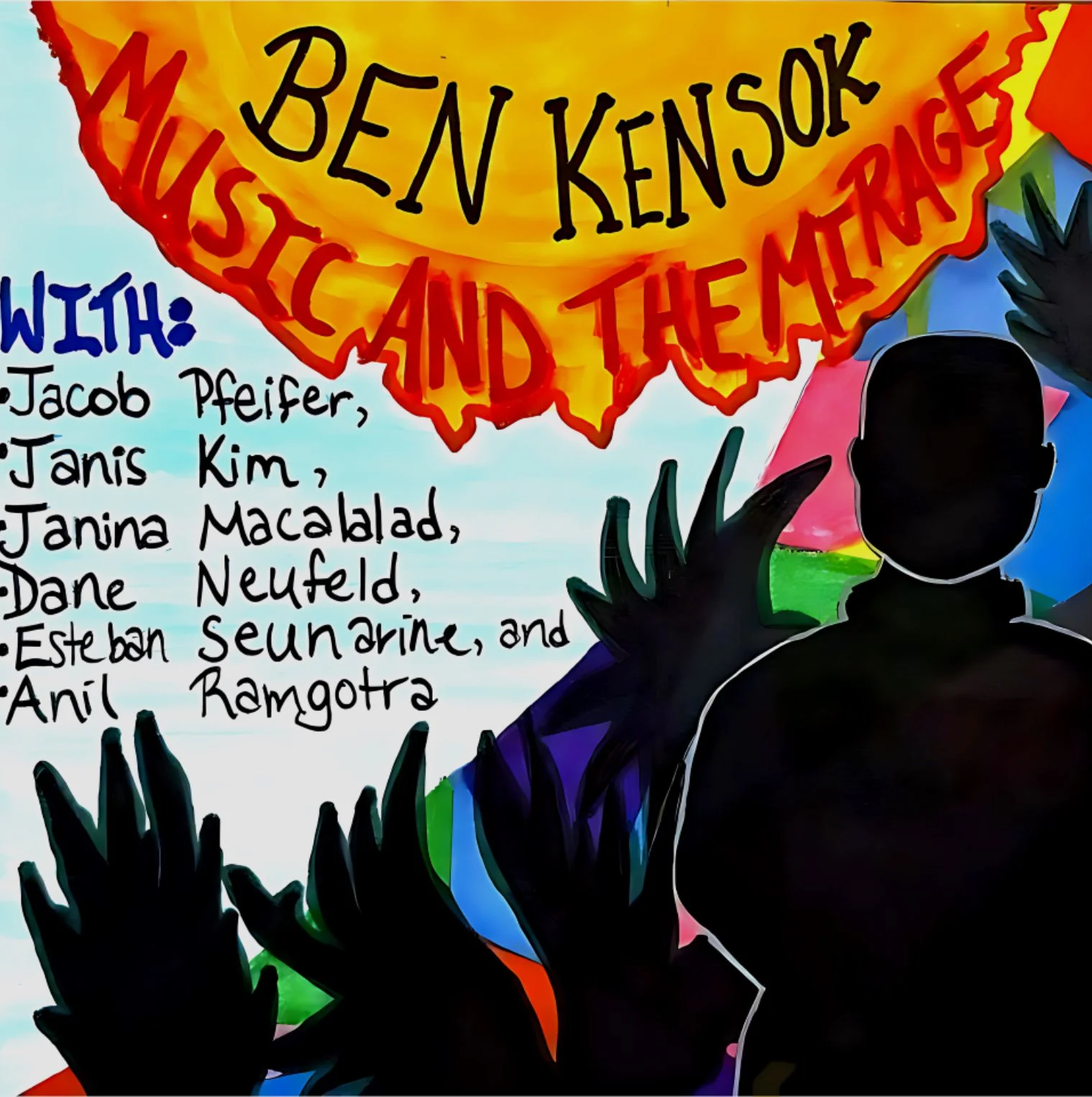
I interviewed Ben Kensok, a saxophonist, keyboardist, and alumnus of the School of Music, where he graduated through the education stream. Now working as a music teacher in Winnipeg, he is the writer and composer for the album Music and the Mirage, which was released on September 5, 2025.


The jazz album includes ten tracks and is 43 minutes long. Recorded in a single take, it’s written to be listened to as a continuous experience; according to Kensok, “This album was created to resemble a live performance, so if you just listen to one song on its own, it might seem kind of abrupt or out of place. But if you start at the beginning of the album and you listen straight through, there are certain songs that transition directly into the next song… ‘I'll Find My Way', ‘Sunset’, and ‘The Watchman's Cry’, which is 4, 5, and 6, lead directly into each other. The same goes for ‘Vengeance of the Diarchy’ [parts one and two]. So if you sit down and you start at the beginning and you go all the way to the very end, you can kind of see the whole picture. And if you can imagine being in an audience, watching a band playing it live, that's kind of the vision that I had going into it.”


I was particularly curious about the heavy symbolism in the album title and the

song titles, which almost presented as an inner dialogue driving each composition,

going from a confused and melancholic process (‘Pacing’ and ‘I’ll Find my Way’

are examples of that) to sudden aggression, featuring themes of violence and

surveillance. When asked about that, Kensok, the writer behind them, had an

explanation for his process. “So the title of the album is Music and the Mirage,

which is kind of based around an experience that I often have, when I’m going through my day to day life. I get distracted really easily, and sometimes I zone out from what's going on. Usually, it’s because I'm thinking about music, and the different melodies and harmonies that are going through my head. So Music and the Mirage is just a compilation of all those different things that I'm hearing in my head that aren't necessarily real, much like a mirage. You think it's there, but it's not actually there.”


As for individual song titles, Kensok explained: “The tune ‘Samba de Meia’ translates from Portuguese to English, to be the sock samba. And it's because my last name is Ken-Sock. And so I was like, oh, this would be a fun way to to name that. Some of the other more specific names, like ‘The Watchman's Cry’ and ‘Vengeance of the Diarchy’ - those are really intense titles. But what I did was I actually wrote these short stories that were based around these ideas, which had the same titles. So there was this whole story of this epic tale that was going through my head as I wrote the music. And you can see, if you read the story and you also listen to the music in those songs, you can kind of hear the story progress.”


For many current music students at BU, releasing an album is a major career goal. For Kensok and the band, the idea originated slowly. “Back in January,” Kensok says, “I had the privilege of recording on Esteban, our drummer’s, album, which was released back in February, called What Blossoms for Bloodshed. That was my first time playing on a full album. And as we were working on it, I just saw his vision come together, and I was thinking that I've been writing all this music for years and I haven't been able to do a whole lot with it. That's when I thought it'd be fun to put my own project together, and I put a lot of time into it. It was arranging, composing, rehearsing, and then we did recording. We did mixing, and then mastered the audio. So it's a long process, which was new to me, but I was very excited about taking on the challenge.”


The album is available to stream on Spotify, YouTube, Apple Music and BandCamp.

A New Year Reset: Choosing Yourself, Locking In, and Becoming Her

By Gabrielle Uwa-Omoregha, Junior Reporter

The start of a new year isn’t just a date change, it’s an invitation. An invitation to pause, to reflect, and to intentionally realign your life with the person you are becoming. A reset doesn’t mean erasing who you were last year; it means honouring her growth while deciding what no longer gets to follow you forward.

This year isn’t about dramatic overhauls or unrealistic resolutions. It’s about soft discipline, intentional self-care, focused academics, and manifesting a life that feels aligned rather than rushed. It’s about choosing yourself quietly, consistently, and without apology.

Redefining Self-Care: More Than Aesthetic Rest

Self-care has been heavily aestheticized; bubble baths, face masks, perfectly curated morning routines. While those things can be comforting, real self-care goes deeper. It is the kind that doesn’t always look cute but ultimately changes your life.

True self-care is setting boundaries even when it feels uncomfortable. It is choosing sleep over late-night scrolling, nourishment over restriction, and peace over chaos. It is learning to check in with yourself instead of constantly pushing through exhaustion.

This year’s reset asks one simple question: What do I ACTUALLY need?
Not what looks productive. Not what earns praise. Not what keeps others comfortable. What YOU need.

Sometimes self-care is rest. Other times, it is discipline. It is showing up to class when motivation is low. It is completing the assignment early so future-you can breathe. It is recognizing that caring for yourself also means preparing yourself.

Romanticizing Solo Dates: Learning to Enjoy Your Own Company

One of the most powerful resets you can make is learning how to be alone; without feeling lonely. Solo dates are an act of self-trust. They say, I enjoy my own presence. I don’t need an audience to live fully.

Solo dates do not need to be extravagant. They can be a quiet coffee-shop study session, a walk with your favourite playlist, a bookstore visit, or dressing up just because. They are moments where you slow down and allow yourself to exist without performing.

When you take yourself out, you stop waiting. You stop postponing joy for the “right” time, the “right” people, or the “right” version of yourself. You begin to understand that you are already worthy of effort.

Solo dates also build confidence, the kind that is not loud, but grounded. The kind that makes you less likely to settle, academically, emotionally, or relationally, because you know how to meet your own needs.

Academic Lock-In: Soft Discipline Over Burnout

Locking in academically does not mean sacrificing your mental health. It means approaching your studies with intention rather than panic. This reset is not about perfection; it is about consistency.

Academic lock-in begins with structure. Knowing your priorities. Blocking time to study. Creating routines that support focus instead of fighting it. It is about studying smarter, not just longer.

It also requires a mindset shift. Your education is not a burden, it is an investment. Every lecture attended, every assignment completed, and every concept understood is a brick in the foundation of your future.

Locking in also means setting boundaries. Saying no to distractions when necessary. Choosing long-term goals over short-term comfort. Understanding that discipline is a form of self-respect.

Most importantly, academic lock-in includes grace. Bad days will happen. Missed goals do not define you. Progress is not linear, and success does not require self-punishment.

Manifesting With Intention, Not Delusion

Manifesting is often misunderstood as passive wishing. It is a collaboration between belief and action. You do not just dream, you move.

Manifesting begins with clarity: knowing what you want and why you want it. Not vague desires, but aligned intentions, peace, stability, growth, and excellence.

It also requires alignment. Your habits must match your goals. You cannot manifest confidence while constantly doubting yourself. You cannot manifest academic success while avoiding responsibility. Energy follows effort.

A reset year asks you to visualize not just outcomes, but processes. Who do you need to become to live the life you want? How does she move? How does she speak to herself? How does she spend her time?

When you manifest from a grounded place, you stop chasing and start attracting—not because the universe owes you, but because you are prepared to receive.

Letting Go of What No Longer Serves You

A reset is incomplete without release. You cannot carry everything forward.

This year, let go of comparison. Someone else’s timeline is not a threat to yours. Let go of guilt for resting. Let go of relationships that drain more than they nourish. Let go of the version of you that survived but is no longer required to suffer.

Growth sometimes looks like grief. You may miss old habits, old dynamics, and old comfort zones. But evolution demands space.

Ask yourself: What am I holding onto out of fear rather than alignment?
Then give yourself permission to loosen your grip.

Becoming Her; Slowly and Intentionally

The most beautiful part of a reset is realizing that becoming your best self does not happen overnight. It happens quietly, in daily choices, and in how you speak to yourself when no one is listening.

You do not need to announce your growth. You do not need to prove your discipline. You do not need external validation to confirm your worth.

This year, focus on embodiment rather than performance. Be the student who shows up prepared. Be the person who honours rest. Be the version of yourself who chooses alignment over chaos.

Resetting is not about pressure; it is about permission. Permission to start again. Permission to try differently. Permission to believe that your future can be both soft and successful.

A Gentle Promise to Yourself

As the year unfolds, remember that you do not need to rush becoming who you are meant to be. You are allowed to grow slowly. You are allowed to take breaks. You are allowed to outgrow what once felt familiar.

This is your reset year, not because everything was broken, but because you are ready to be more intentional.

Choose self-care that sustains you. Take yourself on dates that remind you of your worth. Lock in academically with discipline rooted in self-respect. Manifest boldly but act responsibly.

Above all, trust that showing up consistently, especially on the quiet days-is enough.

You are not starting from zero.


You are starting from experience.

And that makes all the difference.

Happy New Year; same you, better choices.

What is Eco-Emotion?

By Scott Blyth, Contributor

Eco-emotion is a term for the psychological stress related to climate change. It arises from external stimulation - namely, our relationship with the natural world. This stress is not considered a pathology or a diagnosis. Here is how it is explained: fears about climate change are a normal response to these abnormal conditions.

Two major examples of eco-emotion are:

  1. Eco-grief: a sadness and feeling of loss related to environmental destruction or climate change. Eco-grief can be divided into four categories:

    1. Grief from acute disasters like hurricanes, wildfires, and flooding

    2. Grief from slow onset change, like the loss of the polar icecaps. There is no one major break event; this can lead to a generalized sense of stress, sadness, and anxiety

    3. Vicarious grief, caused by seeing others suffering or hearing news of disaster

    4) Anticipatory grief, caused by thinking about what’s to come

2) Eco-anxiety: anxiety that may be related to both the present (e.g. endangered species) and the future (e.g. “what if mass extinction occurs?”). It is a chronic fear related to environmental doom. According to a 2020 survey by the American Psychological Association, “upwards of 2/3 of all adults had experienced eco-anxiety.”

Eco-emotion is very common: 73% of 8-16 year olds are worried about the state of the planet. (Of note, 41% do not trust adults to tackle challenges presented by climate change.) 60% of 16-25 year olds are very worried about climate change. Only 30% of that group felt governments are taking environmental concerns seriously. Some other emotions that you might experience connected to climate change are worry, anger, frustration, depression, helplessness, empathy, betrayal, sadness….

Most of the time, the eco-emotion that we might experience is mild, and can actually be looked at as a good thing. This is because emotion is often what leads people to act. It is possible that feelings of ecological anxiety and grief, although uncomfortable, are in fact the crucible through which humanity must pass to harness the energy and conviction needed for the life-saving changes now required!

However, it is important to remember that climate change disproportionately affects certain communities. For example, Indigenous peoples, by degradation of their traditional territories; seniors; the disabled; and those living in poverty. For some people, especially within these groups, the emotional experience of climate change might be more extreme, and can lead to negative consequences.

Some results of eco-emotion may include:

  1. Solastalgia: an overwhelming, hopeless sense that things have suddenly and permanently changed

  2. Denialism: at first, there was a denial of the existence of climate change, but now many people argue that climate change exists, but it is not human caused

  3. Eco-paralysis: being overwhelmed by the complexity of the situation, and so unable to take any action

  4. Eco-nihilism: the view that it is impossible to do anything about climate change, so we must simply continue business as usual

  5. Blind hope: believing technology will save us

  6. Eco-guilt: the belief that one’s own actions are creating the problem

So, how can we cope? As mentioned, turning emotion into action, and also maintaining connection to your community, are vital. You can incorporate ritual and practise, focus on what you can control, find solace in natural places, read. One also needs to take care of their body — eat well, get regular exercise, practice mindfulness. Also, remember it’s okay to seek clinical support.

Though it feels easier, we can’t ignore the issue of climate change. Let’s be clear, there will be catastrophic health risks for a child born today if an adequate response to climate change does not occur. These include increasing rates of food insecurity and undernutrition, of diarrheal and infectious diseases, of complications from air pollution, and increased morbidity and mortality from exposure to extreme weather events such as heatwaves, flooding, wildfires, and hurricanes. So, with all of this in mind, don’t let your genuine feelings about climate change slow you down - use them to ‘drive’ you into taking action! Every little step, or big step, helps!

Relationships Nowadays - Reflecting on “Situationships"

By Rosalina Valentine, Junior Reporter

What are relationships nowadays? That’s a question my friends and I have been wondering since summer ended. What are they, really? Do they even exist anymore? Are they what they used to be? To answer those questions, I have to ask you one first: what is a relationship? I know — only idiots answer a question with a question. But if you asked people, most would say a relationship is when two people ‘love each other.’ The real question is: do people truly love each other anymore? Or even want to?

The American psychologist Robert Sternberg once explained his Triangular Theory of Love. According to Sternberg, love consists of three components: intimacy, passion and commitment. Intimacy is about the feelings of closeness, connectedness and bondedness. Passion drives the romance, physical attraction, and intensity. Commitment is the decision to stay — the long-term choice that gives love its security and endurance. Sternberg said that knowing about these components of love may help couples avoid pitfalls in their relationships, because understanding helps people recognize the areas that need improvement — or when it’s time to let go.

But what does Sternberg’s theory have to do with relationships nowadays?

Everything! Understanding what loves means to you changes how you see your relationships and yourself. These days, people are less likely to label what they have with someone and instead, they call it a hookup, a situationship, or friends with benefits. Or, my personal favourite, “just friends”. There’s something deeply triggering about being labelled “just a friend” or “we’re just casual” by someone you care about. Trust me, I have been in that position before. From my experience, you would rather get shot with a nail gun repeatedly than get called someone’s “situationship” or “friend” for the moment.

Do relationships nowadays even exist? In my opinion — no. Maybe that sounds too dramatic, but I’m not exaggerating. Gen Z invented the word “situationship” for a reason. A term used to define a relationship that is more than a friendship but less than a committed relationship, which involves both emotional and physical intimacy. In other words, an excuse to keep someone close enough to matter, but not close enough to stay. It’s cruel, really. Sometimes you don’t even realize you’re in one - until you see the person that you like kissing someone else at the bar after begging you to come, just to watch them be with someone else.

Brutal, right? I wonder who went through that this summer?

Okay, okay, relationships still exist, sure. But are they what they used to be? Do people still confess their feelings the way Mr. Darcy does in Pride and Prejudice? Or Conrad Fisher in The Summer I Turned Pretty? Or even Laurie Laurence in Little Women? You might say, “but those are just movies and shows.” Movies and shows are inspired by real people — by us. So, why can’t we do the same thing? Why not confess your feelings for someone in a field at sunrise, or on a beach while the love of your life marries your brother, or maybe on a hill where the sun is setting (and they reject you anyways)? Why not take the chance to do something romantic, make a grand gesture, even if it doesn’t work out? Why? Why? Why?

Sing them a song, even if your voice makes them wish for temporary hearing loss. Write them a letter, even if your handwriting looks like ancient hieroglyphs. The point isn’t perfection — it’s the thought and dedication. It’s the effort, the vulnerability, the thought of trying. Those gestures — no matter how awkward they are — they create intimacy and commitment. They make love meaningful and sometimes unforgettable.

So, what are relationships nowadays? They’re a mystery to me. People rarely even label their significant other. In this generation, we’ve invented a whole vocabulary just to avoid saying “I love you.” Situationships are the new, awful label for people who just want the emotional and physical comfort of surface-level intimacy. They just want someone in the meantime until they do the Irish goodbye. Without true intimacy, passion, and commitment — without taking risks — we’re left with confusion, temporary comfort, and something we now call a situationship.

My Changing View of Artificial Intelligence

By Lu Jiang, Junior Reporter

I am not a science or engineering student. I know very little about new technology and the current development of AI.

When I searched my memory, it seems my first use of AI was in 2014, when I bought my first iPhone. But I only talked with Siri during the new-phone setup, and the phone recorded my voice. That feature felt too new and too advanced for me. I was not used to it.

Sometimes, when I talked or was in a meeting, I would accidentally wake it up. It would speak loudly - “Hmm?” Once, in a meeting with my supervisor, it even suddenly said, “Sorry, I don’t understand what you are saying.” Everyone laughed, and I felt embarrassed. So I turned the function off.

Later I read a news story about a man who lived alone. He was taking a shower when he suddenly found the bathroom door would not open. His home was on more than the twentieth floor of an apartment building, and shouting did not bring anyone. He thought he would freeze or starve to death in the bathroom. In his desperation, he suddenly remembered Siri. Before showering he had put his iPhone on a stool outside the bathroom door. He shouted to wake it up, and it helped him call the emergency services.

At that moment I reexamined my view of artificial intelligence. I slowly began to accept how it can change our lives. So I turned Siri back on.

After that, I found that AI had already entered my life.

My mother had bought an iRobot robot vacuum cleaner. I could control it with a phone app, so it could clean even when no one was home.

Our home cameras would keep sending me alerts when they detected movement or unusual sounds.

I later bought a Tmall Genie smart speaker. After connecting it to Wi-Fi, I only needed to tell it what song I wanted and it would search and play it. It is similar to an Amazon Echo Dot. When I write or do housework, I can change songs just by moving my lips. When I feel bored or lonely late at night, it can even chat with me.

Times change fast. I am not someone who chases new technology or new trends. I only began using AI after these products had already entered my daily life.

Later our family installed Xiaomi smart home devices. Xiaomi is a Chinese electronics brand. We had smart lights, a smart drying rack, a smart washing machine, a robot vacuum, a smart door lock, a smart door viewer, two cameras, a temperature and humidity meter, a Xiao Ai speaker, a curtain motor, a Mi air conditioner, a Xiaomi TV, a Xiaomi water purifier, smart power strips, and a smart plug for the air conditioner. All of these could link together and be controlled by voice or remotely.

Because the technology was not very mature, the smart home did not meet our expectations. My parents often shouted, “Xiao Ai, turn on the light!” “Xiao Ai, turn on the light!” “Xiao Ai, turn off the light!” “Xiao Ai, turn on the TV!” Many times they had to say the command again and again, until the speaker finally understood and executed it by chance.

Later my family thought it was too troublesome and that doing things manually was faster. So we returned to the mechanical way of living.

My feelings about AI have always gone up and down.

I have changed cars several times, but they were always gasoline cars. I never dared to consider an electric car. Self-driving feels as distant to me as if it would happen hundreds of years later.

Before I came to Canada, I only used search engines to find information. Now I use ChatGPT. But I find it can be very misleading. The information it gives is not always true, and the data can be out of date. It cannot replace the human brain.

To me, it is still quite limited. I think it only analyzes within the data and models given to it and then gives the most probable answer according to its program. Its biggest advantage is speed.

So many times, when I want to learn about a place, a product, or an event, and I have enough time, I prefer to read opinions from real people on social media.

I am not worried that AI will replace the human brain. But many low-skill jobs will be taken over by machines controlled by AI. This is an economic issue worth worrying about.

Recently Amazon’s layoffs made a lot of news, and that made people more anxious.

I know a local Canadian woman who is 86 years old. Last month her mother passed away. Her mother was 105. When I thought she would be very sad, I comforted her. She replied, “Thank God. I am finally free.”

She was not very sad. She had taken care of her mother, who had dementia, for fourteen years. She herself is an old person now. She said she needs care, too.

I think AI should be used more in those jobs where labor is extremely short.
I hope AI development can be controlled and that it will serve human needs.
I do not want it to run wild like a runaway horse.

The future is unknown.
We will wait and see.